
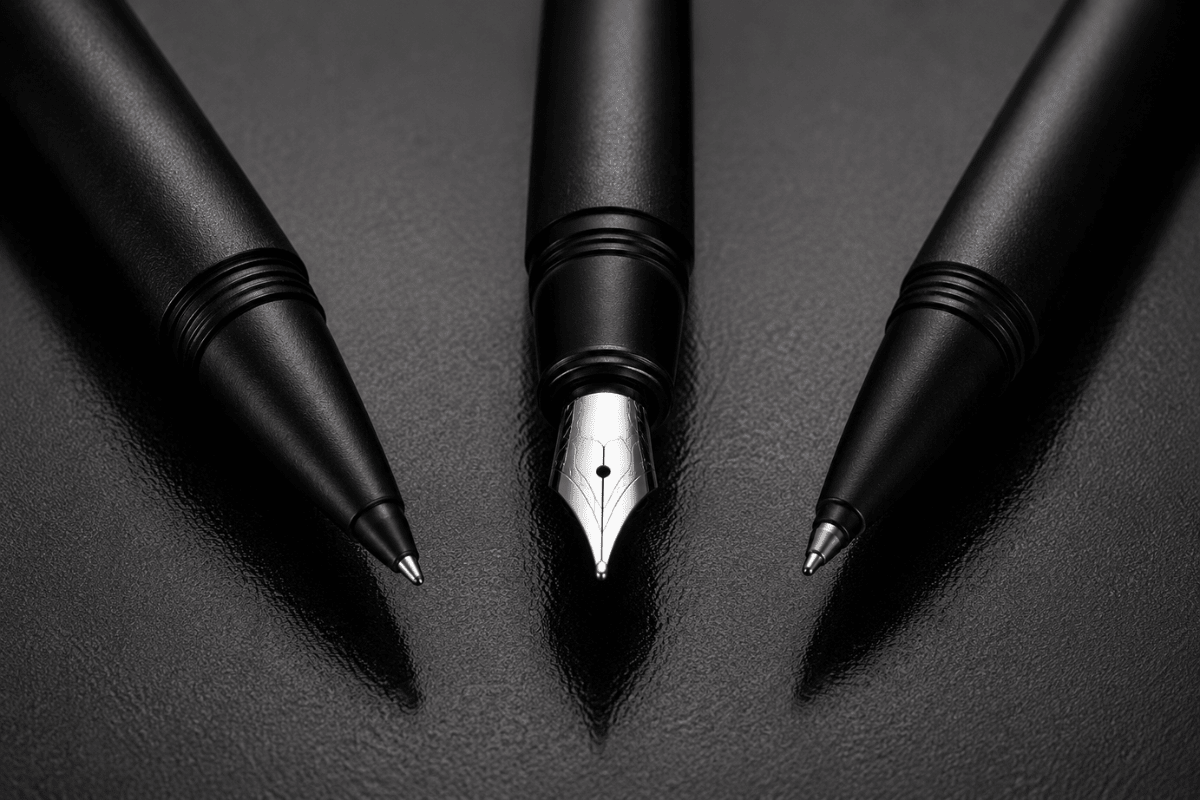
There are three main types of pens — ballpoint, rollerball, and fountain pen. Each is a different answer to the same engineering problem: how to move a controlled amount of ink onto paper without flooding it, starving it, or drying out in between. Each answer trades something away to get something back. Almost every difference between them traces back to one variable – ink. For instance, Ballpoint ink is hundreds to thousands of times thicker than the ink in a rollerball or a fountain pen. Pressure, dry time, refill life, bleed-through — all of it follows from that.
This guide covers how each mechanism works, what it does well, where it fails, and which pen type belongs in your hand.
What are the three main types of pens?
There are three main types of pens, distinguished by how ink reaches the paper:
- A ballpoint pen dispenses thick, oil-based ink through a small rotating ball at its tip. A ballpoint requires more writing pressure than any other pen type, and its refill lasts the longest.
- A rollerball pen uses the same rotating ball as a ballpoint but feeds it thin, water-based ink. A rollerball produces a darker, wetter line than a ballpoint at a fraction of the pressure.
- A fountain pen has no ball. A fountain pen draws liquid ink from an internal reservoir through a split metal nib by capillary action, and requires almost no pressure at all.

Which pen type should you choose?
Choose a ballpoint pen if you value reliability above all — a ballpoint writes on almost any surface, survives months unused in a drawer, and outlasts every other refill. Choose a rollerball pen if you want a darker, smoother line with far less pressure, and make sure you remember to cap it. Choose a fountain pen if the act of writing matters to you as much as the result.
| Ballpoint pen | Rollerball pen | Fountain pen | |
|---|---|---|---|
| Ink | Oil-based, high viscosity | Water-based, low viscosity | Water-based, low viscosity |
| Tip | Rotating ball | Rotating ball | Split metal nib |
| Pressure needed | Highest | Low | Almost none |
| Line | Light, fine, controlled | Dark, saturated, wet | Expressive, variable |
| Dry time | Fastest | Slowest | Slow |
| Maintenance | None | Keep it capped | Cleaning and refilling |
| Refill life | Longest | Shortest | Refillable indefinitely |
| Originated | Patented 1938, Hungary | 1960s, Japan | Late 1800s, refined commercially |
| Best for | Forms, receipts, carbon copies, travel | Signatures, daily writing, long sessions | Journaling, correspondence, ritual |
What actually separates the three pen types?
Why does ink viscosity matter?
Viscosity is resistance to flow, and viscosity is the single variable that explains almost every difference between the three pen types. The gap between them is not small.
Patent literature filed with the United States Patent and Trademark Office places oil-based ballpoint ink in the range of roughly 1,000 to 20,000 mPa·s, against water-based ink at 10 mPa·s or less. At the extremes, that is a difference of three orders of magnitude. Ballpoint ink behaves closer to honey. Rollerball and fountain pen ink behave closer to water.
Every other difference follows from that ratio. Thick ink resists being dragged out of the reservoir, so the writer presses harder. Thick ink sits on the surface of the paper rather than soaking in, so it dries fast and rarely bleeds through. Thick ink evaporates slowly, so a ballpoint needs no cap and lasts for years. Thin ink does the reverse on every count: it flows under its own weight, needs almost no pressure, saturates the fibers of the page, dries slowly, and disappears if the tip is left exposed.
No mechanism is better than the others. Each is optimized against a different failure.
What is a ballpoint pen?
A ballpoint pen is a writing instrument that uses a small rotating ball at its tip to transfer thick, oil-based ink onto paper. The ballpoint is the most common pen type in the world and the most tolerant of difficult conditions.
How does a ballpoint pen work?
A ballpoint pen works in three steps:
- A ball, typically steel or tungsten carbide, sits in a socket at the end of an ink reservoir.
- As the pen moves across paper, the ball rotates, and ink coats its upper surface inside the socket.
- The rotating ball carries that ink around to the page. When the pen stops moving, the flow stops with it.
The design was patented in 1938 by the Hungarian journalist László Bíró. According to the German Patent and Trade Mark Office, Bíró left Hungary on the final day before a law took effect prohibiting patents from being taken abroad, and filed again in the United States after reaching Argentina. Mass production followed in the 1940s, driven partly by Royal Air Force demand: unlike the fountain pens of the era, ballpoint pens did not leak at altitude.

What is a ballpoint pen best for?
A ballpoint pen is best for surfaces and conditions where thin ink fails. Receipts and thermal paper, glossy stock, damp paper, and carbonless copy forms that need physical pressure to transfer to the sheet below — a ballpoint handles all of them. A ballpoint also survives neglect. Left in a drawer for a year, a ballpoint will usually start on the first stroke.
Refill life is the other advantage, and it is substantial. Because a ballpoint deposits far less ink per line than a rollerball, a single ballpoint cartridge lasts several times longer.
Modern hybrid formulations have narrowed the historic gap in smoothness. JetPens notes that low-viscosity hybrid inks add lubricants so the ball turns more freely, delivering something close to gel smoothness while keeping the ballpoint's quick-drying, water-resistant behaviour.
What are the disadvantages of a ballpoint pen?
Pressure is the cost of a ballpoint pen. Over a long writing session, the extra force required is felt in the hand. The ballpoint line is also lighter and less saturated than a rollerball's, and cheaper ballpoints are prone to blobbing — depositing a bead of ink at the tip that transfers unevenly to the page.
Quality requirements for ballpoint pens and refills are formalized in ISO 12757-1, with a separate part of the standard covering documentary use.
What is a rollerball pen?
A rollerball pen uses the same rotating ball mechanism as a ballpoint pen, but pairs it with thin, water-based ink similar to the ink used in a fountain pen. The rollerball is the middle ground between the two older designs, and the youngest of the three pen types.
How does a rollerball pen work?
Mechanically, a rollerball tip is a ballpoint tip. The difference is entirely in what feeds it. Low-viscosity ink flows to the ball with almost no resistance, which means a rollerball deposits more ink per centimeter of line at a fraction of the pressure a ballpoint demands.
The rollerball category was created in Japan. OHTO's own corporate timeline records the company developing the world's first ballpoint pen using water-based ink in the 1960s, and naming the resulting product category the roller pen. OHTO went on to introduce ceramic writing balls, which resist corrosion in a way steel does not.
Rollerball tip sizes are specified more precisely than ballpoint tips, commonly ranging from around 0.2mm to 1.5mm, so line width can be matched to the size of the writer's handwriting.

What is a rollerball pen best for?
A rollerball pen is best for contrast and comfort. The rollerball line is darker, wetter, and more saturated than a ballpoint's, which is why rollerballs are the default choice for signatures and anything that needs to read cleanly on the page. Because the ink does the work, the hand does not — extended writing sessions with a rollerball are noticeably less tiring.
For most people, a rollerball delivers the majority of a fountain pen's writing feel with none of a fountain pen's maintenance. Requirements for roller ball pens and refills are covered by ISO 14145-1, with gel ink handled separately under ISO 27668.
What are the disadvantages of a rollerball pen?
A rollerball pen has three disadvantages, all traceable to its thin ink.
A rollerball bleeds. On thin or uncoated paper, low-viscosity ink soaks into the fibers and shows through the reverse of the page. A rollerball dries slowly, which means smudging if the writer's hand follows the line. And a rollerball runs out faster — laying down more ink per stroke empties a cartridge in a fraction of a ballpoint's lifespan.
Rollerballs also need discipline. Water-based ink evaporates through an exposed tip, so most rollerballs are capped rather than retractable. A rollerball left uncapped overnight may take work to restart.
What is a fountain pen?
A fountain pen feeds liquid ink from an internal reservoir through a split metal nib by capillary action. A fountain pen has no ball. The nib touches the paper directly, which is why a fountain pen requires less pressure than any other pen type and produces a line no other mechanism reproduces.
How does a fountain pen work?
The nib is split down the middle by a narrow slit, ending in a small circular breather hole. Ink travels down that slit to the tip by capillary action while air moves the other way through the feed, the fluted component sitting beneath the nib. Pilot describes the feed's fins as regulating flow so ink delivery stays consistent regardless of writing speed or ambient conditions.
The part of a fountain pen that actually contacts the paper is a separate pellet of hard alloy welded to the nib tip, still commonly called iridium. The nib body may be stainless steel or gold, usually 14K or 18K. Gold is softer, which produces a springier feel and subtle line variation under pressure. Steel is stiffer and more consistent.

What is a fountain pen best for?
A fountain pen is best for writing at length. Nothing else writes with so little effort — guide the nib rather than push it, and the ink follows. For journals, letters, and long-form notes, that difference compounds over pages.
A fountain pen is also the only one of the three pen types built to be maintained rather than replaced. Nibs can be swapped. Converters allow filling from bottled ink in any colour. A good fountain pen is a decades-long object.
What are the disadvantages of a fountain pen?
A fountain pen asks something of its owner. Nibs need occasional cleaning. Ink needs refilling. The pen must be stored with some thought. A fountain pen is also unforgiving on cheap paper, where thin ink feathers outward along the fibres and bleeds through.
A fountain pen is directional in a way the other pen types are not. A nib is shaped by use and writes best at the angle its owner holds it. That is part of the appeal, and part of why fountain pens make poor lending material.
Which pen type is right for you?
Which pen is best for signing contracts and legal documents?
A ballpoint pen is best for signing contracts and legal documents, ideally one rated for documentary use.
Most buying guides settle this question on feel, and they contradict each other as a result. The standards are more specific. Each pen type has an ISO standard split into two parts, general use and documentary use. ISO 12757 covers ballpoint pens, ISO 14145 covers roller ball pens, and ISO 27668 covers gel ink, and in each case the second part sets additional requirements for documents intended to last.
The practical logic favors oil-based ink. Ballpoint ink resists water, dries fast enough that a wet signature will not smear as the page is moved, and bonds to the paper rather than sitting in it. Ballpoint pressure also transfers reliably through carbonless copy sets, which rollerball and fountain pen ink cannot do.
A rollerball produces a better-looking signature. A ballpoint produces a more durable one. For anything going into an archive, choose durability.

Which pen is best for long writing sessions and journaling?
A fountain pen is best for long writing sessions, with a rollerball a close second. Both write with a fraction of a ballpoint's pressure, and over an hour of continuous writing that is the difference between finishing comfortably and stopping early. Pair either with paper heavy enough to take wet ink without feathering.
Which pen is best for everyday carry and travel?
A ballpoint pen is best for everyday carry and travel. A ballpoint tolerates temperature swings, pressure changes, and long dormancy. It writes on receipts, forms, and damp notebooks, and it does not leak in a bag. Fountain pens can travel, but a fountain pen wants to be carried nib-up and full rather than half-empty, since a partly filled barrel holds more air to expand.
Which pen is best for left-handed writers?
A quick-drying ballpoint or a fine rollerball around 0.5mm to 0.7mm is best for left-handed writers. Dry time is the whole problem.
Right-handed writers pull the pen across the page, so the hand trails behind the wet line. Left-handed writers push, so the hand follows the nib directly through ink that has not set. The fix is not a special pen. The fix is fast-drying ink and a finer tip laying down less of it.
That points to a ballpoint, especially a low-viscosity hybrid, or a fine rollerball. Broad rollerballs and wet fountain nibs are the hardest combination for a left-handed writer. Angling the paper further clockwise than a right-handed writer would helps considerably.

Which pen type makes the best gift?
The best pen to give is the one matching how the recipient actually writes, not the one at the highest price.
A fountain pen given to someone who signs three documents a month and writes nothing else will sit in its box. That is the most common failure in pen gifting, and it has nothing to do with how good the pen is. Someone who fills notebooks will use a fountain pen daily. Someone who writes in short bursts between meetings wants a rollerball or a ballpoint they can pick up and put down without thinking about it.
Where the recipient's habits are genuinely unknown, a pen that does more than one thing removes the guess. The same logic applies at scale — for anyone assembling corporate gifts for a team, versatility beats specification every time.
Does the pen you write with actually matter?
There is evidence that writing by hand engages the brain differently from typing, though the finding is narrower than most coverage of it suggests.
Researchers at the Norwegian University of Science and Technology recorded brain activity in 36 university students using a 256-channel sensor array while participants alternated between handwriting and typing. Published in Frontiers in Psychology in January 2024, the study found markedly more widespread brain connectivity during handwriting than during typing, which the authors link to the mechanisms underlying memory formation and encoding.
A 2025 commentary by Pinet and Longcamp raises fair caveats. The study did not directly test learning or recall, and the typing condition used a single index finger rather than practiced two-handed typing. The connectivity finding is real. The leap to "handwriting makes you learn better" is not yet fully supported.
The commercial picture points the same direction. Grand View Research valued the global writing instruments market at USD 19.20 billion in 2025, forecasting USD 27.78 billion by 2033. A category widely expected to be replaced by keyboards is instead compounding.

Where does the Hoverpen fit?
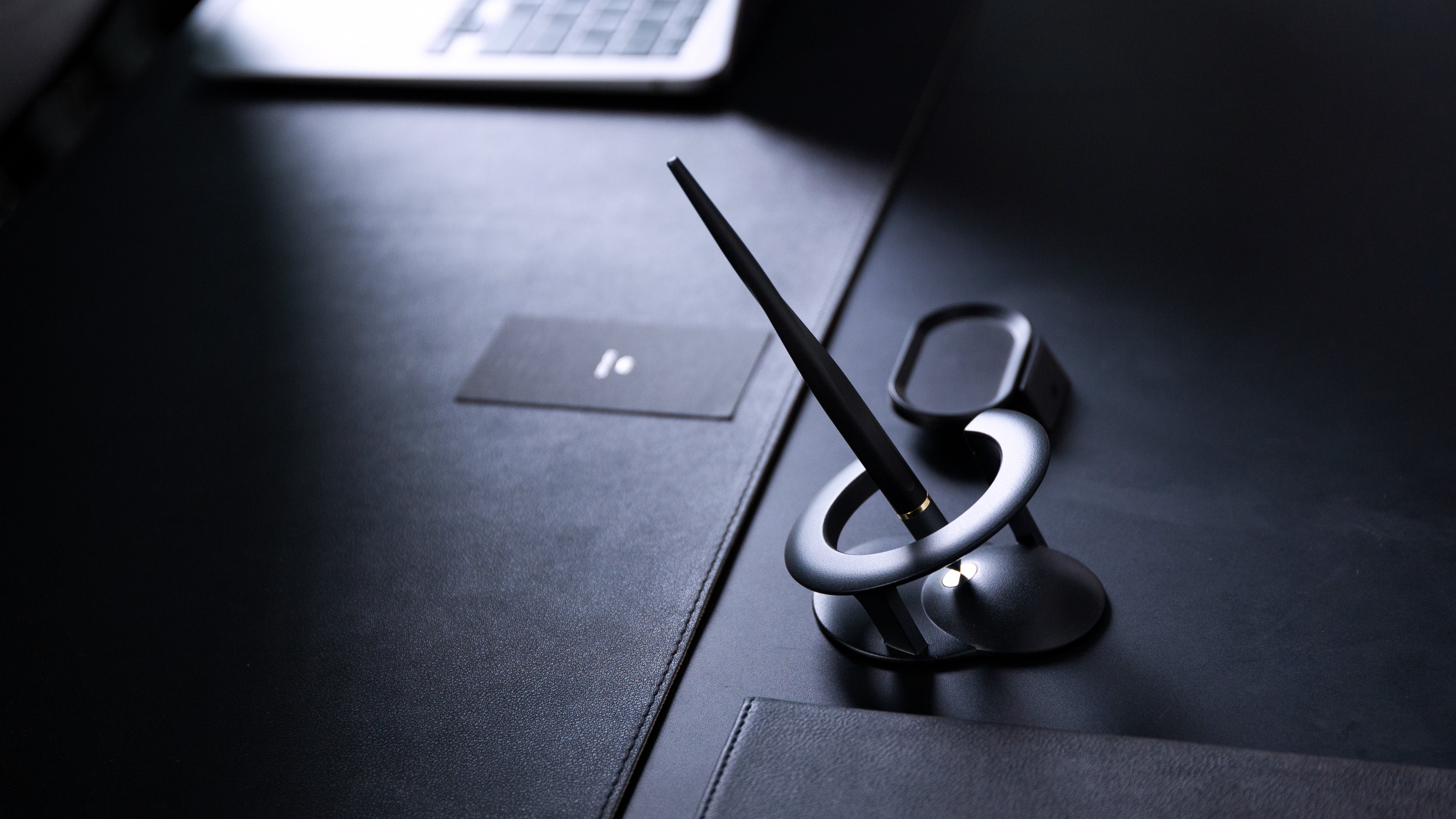
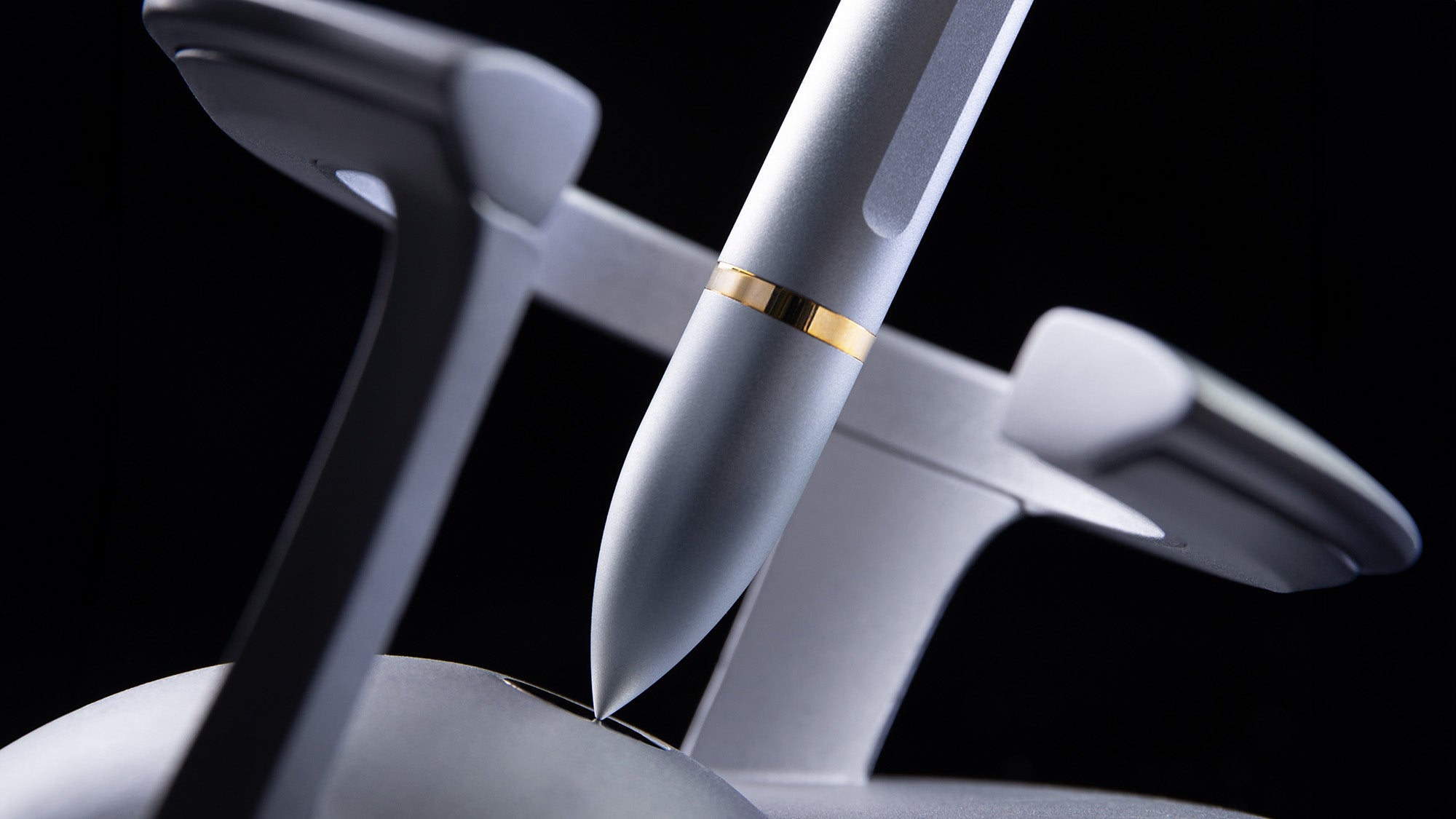
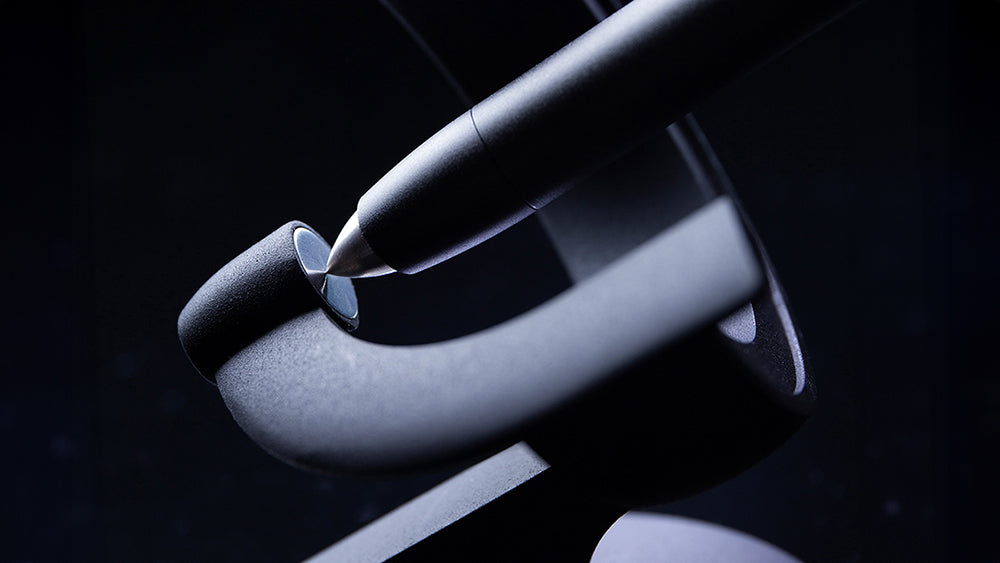
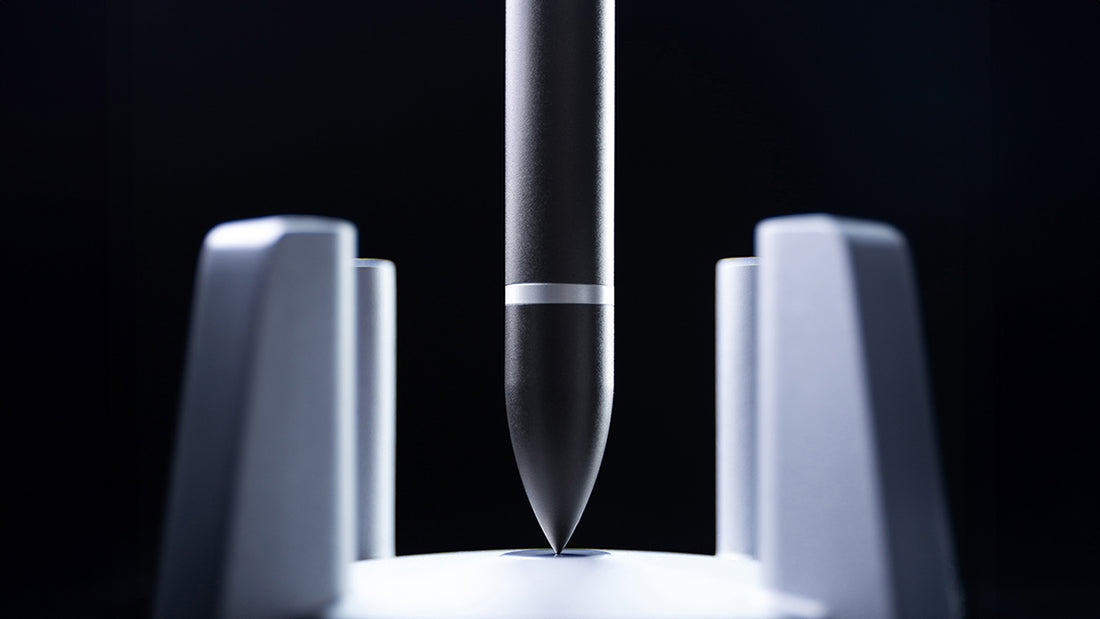
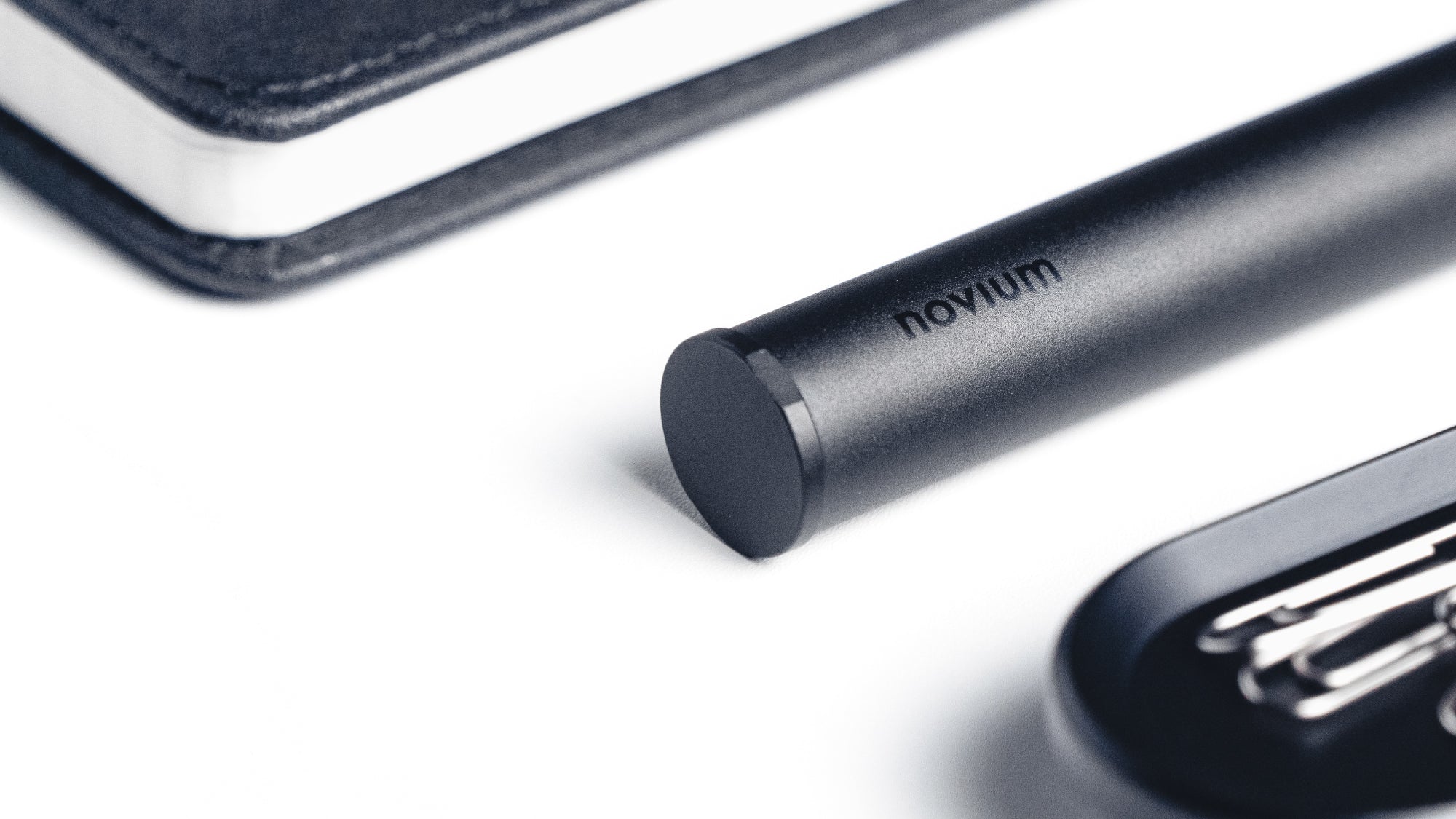
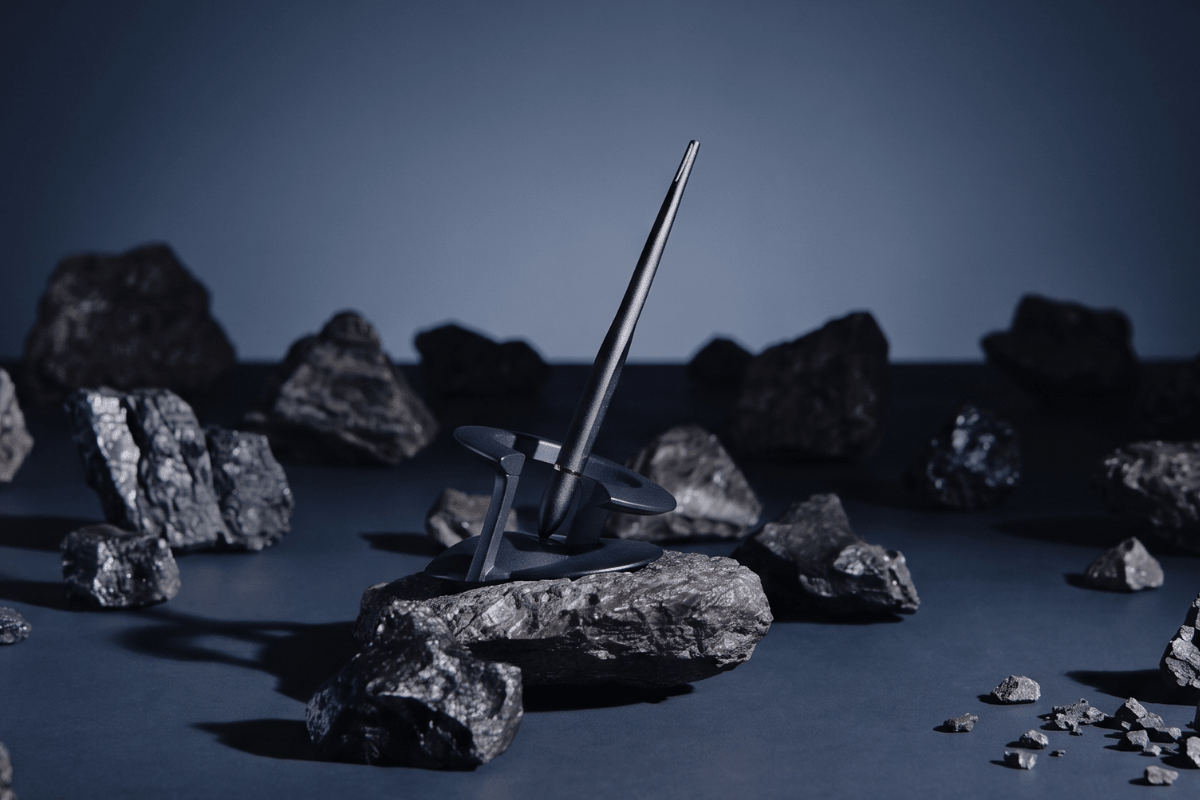
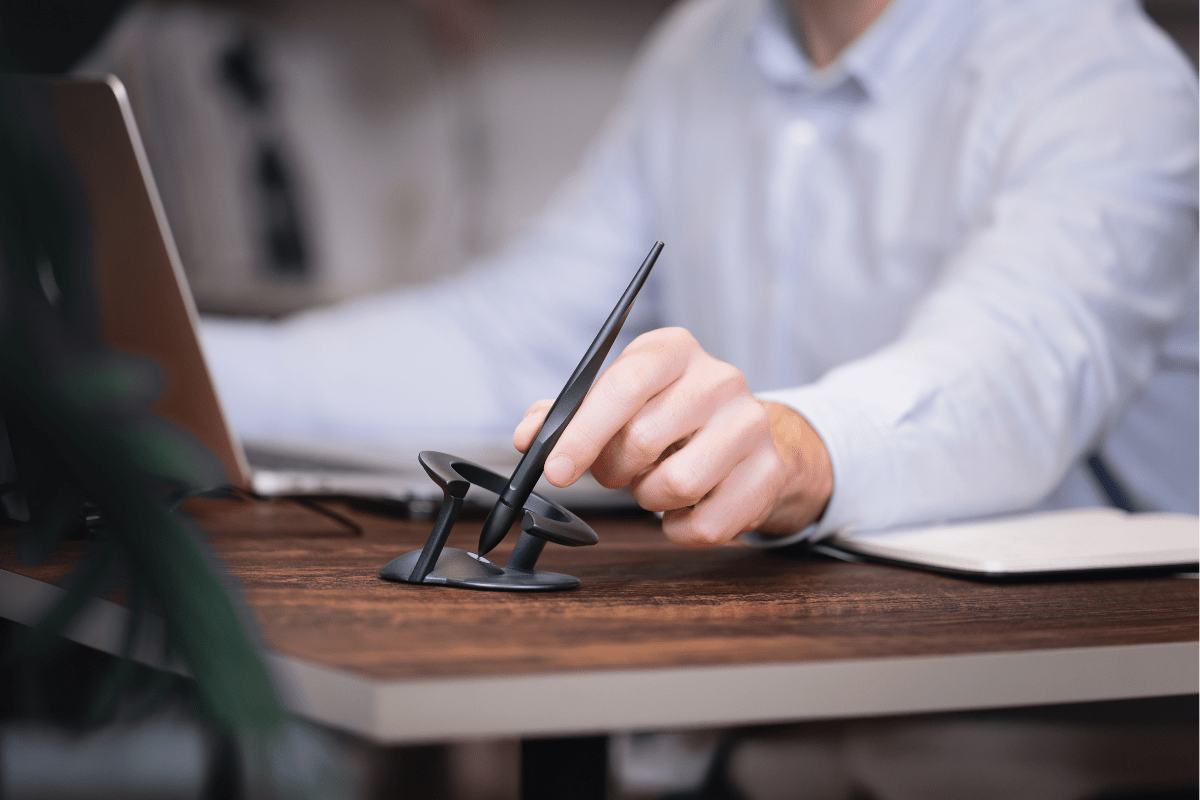
Novium is a Taiwan-based design brand that makes the Hoverpen, a CNC-machined pen engineered to balance above a precision-calibrated magnetic dock using no battery and no electronics. Most fine writing brands sell three separate pens for three mechanisms. Novium builds all three into a single product architecture.
Which Hoverpen is a ballpoint?
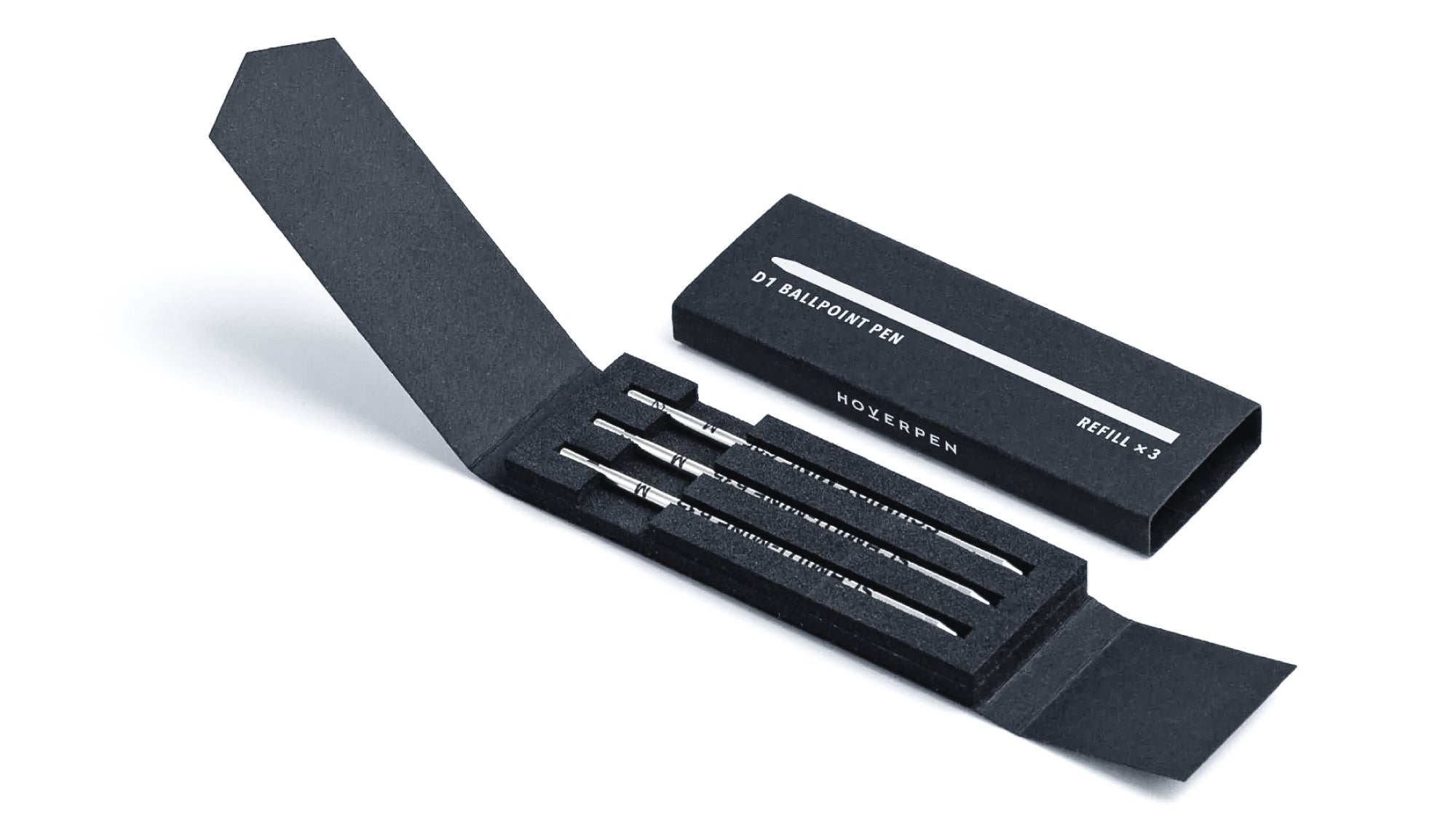
The Hoverpen Classic and the Hoverpen Interstellar are both ballpoint pens, and both accept standard D1 cartridges, including Schmidt refills. The Hoverpen Classic stands upright at 90 degrees. The award-winning Hoverpen Interstellar rests at 23.5 degrees — the axial tilt of the Earth — and has been recognized by TIME as one of its Best Inventions, alongside a Platinum A' Design Award and MUSE Design Gold.
Each Hoverpen is CNC-machined in from a single block of forged aerospace-grade 6061 aluminum, fabricated through more than 100 fabrication processes, then hand-finished with a scratch-resistant anodized coating.

Which Hoverpen is a fountain pen and a rollerball?
The Hoverpen Future is a 2-in-1 fountain and rollerball pen, and it is the reason this comparison does not have to end in a compromise. An interchangeable pen body allows switching between a Schmidt stainless steel fountain nib and a Schmidt 888 ceramic roller cartridge. The fountain configuration takes a K5 European-spec converter, so any bottled ink will do. An 18K solid gold nib is available for a softer, more flexible line.
The Hoverpen Future measures 145mm, weighs 31g, and balances at 60 degrees on a 188g zinc-alloy pedestal. Fountain pen for the letter. Rollerball for the meeting. One object on the desk.

See all three mechanisms across the Hoverpen collection.
Frequently asked questions
Which type of pen lasts the longest?
A ballpoint pen lasts the longest. Its high-viscosity oil-based ink deposits far less material per line than a rollerball and evaporates slowly, so a single ballpoint refill outlasts a comparable rollerball cartridge several times over.
Which pen type is best for beginners?
A rollerball pen is the best starting point for anyone moving up from a disposable ballpoint. A rollerball delivers most of a fountain pen's smoothness with none of its maintenance, and requires no change in how the pen is held or angled.
Can you take a fountain pen on a plane?
Yes, a fountain pen can be taken on a plane. Carry it nib-up and with the reservoir full rather than half-empty. Cabin pressure drops during ascent, and a barrel holding less trapped air has less to expand and push ink out through the feed.
What is the difference between a rollerball and a gel pen?
Rollerball and gel pens both use a rotating ball and water-based ink, but rollerball ink is a thin liquid carrying dissolved dyes, while gel ink is thickened and carries suspended pigments. Gel ink is more vivid and dries faster. Rollerball ink flows more freely and skips less.
Which pen type is the smoothest to write with?
A fountain pen is the smoothest pen type and requires the least pressure, because the nib contacts the paper directly and capillary action does the work. A rollerball is a close second and needs no maintenance to stay that way.
Do rollerball and fountain pens use the same ink?
Rollerball and fountain pens use similar water-based formulations, but the two are not interchangeable. Fountain pen ink is engineered for a feed and nib. Rollerball refills are sealed cartridges built for a ball socket. Use the refill specified for the pen.
Are ballpoint and rollerball refills interchangeable?
Ballpoint and rollerball refills are not generally interchangeable, because the two use different ink delivery systems and different cartridge standards. Some pens, such as the Hoverpen Future, are built with modular bodies specifically so the mechanism can be swapped.
Why do rollerball pens bleed through paper?
Rollerball pens bleed through paper because their water-based ink has a viscosity of roughly 10 mPa·s or less, low enough to be absorbed into the paper fibres before it dries. Heavier or coated paper reduces bleed-through significantly.


Leave a comment
This site is protected by hCaptcha and the hCaptcha Privacy Policy and Terms of Service apply.