
The fastest way to be more creative at work is to stop working, briefly and deliberately, several times a day. Not because you are tired. Because the idea you are chasing has already narrowed your thinking, and you cannot see it happening from the inside.
This is not a talent problem. Psychologists call it cognitive fixation, and it is the reason your fourth hour on a problem produces variations instead of alternatives. The research on taking breaks is more specific, and more surprising than the usual advice to step away from your desk. Some breaks reliably help creative work. Some make it worse. The difference is not how long you take a break for. It is what you do during the break.
Worth knowing why this matters now: the World Economic Forum's Future of Jobs Report 2025 lists creative thinking among the skills employers expect to grow in importance through 2030, alongside resilience and curiosity. The skill is in demand more than ever, however, most people are still struggling to manage it.
What stops you from being creative at work?
Two things, mostly. You get stuck on one approach, and you never notice you are stuck.
Cognitive fixation, explained
Cognitive fixation is the failure to abandon a problem-solving angle that is not working. Your mind keeps returning to the same framing, and every new idea arrives as a variant of the last one.
The effect is old and well documented. In the 1940s, Abraham Luchins showed that people who solved a series of problems using one complex method kept using it even after a far simpler method became available. Around the same time, Karl Duncker described functional fixedness — the inability to see an object as anything other than what it is normally for. Both are cited as the foundation of the modern work on task switching and creativity published in Organizational Behavior and Human Decision Processes.
Fixation is not a lapse in effort. It is what sustained effort does to you.
Why being on a roll is often a warning sign
Jackson Lu, Modupe Akinola and Malia Mason made this point directly in Harvard Business Review: the feeling of momentum can be misleading, because we tend to generate redundant ideas when we work without pause. Their advice is to interrogate the feeling rather than trust it.
There is a quick test. Look at your last three ideas. Are they different answers, or the same answer in three costumes? If it is the second, you are not on a roll. You are circling.
Do breaks actually make you more creative?
Yes — and the mechanism is fixation, not fatigue. Setting a problem aside loosens the grip of the approach you were locked into, so you return with access to angles that were unavailable minutes earlier.
Lu, Akinola and Mason tested this across a series of experiments. Task switching improved both principal forms of creativity: divergent thinking, where you generate many possibilities, and convergent thinking, where you narrow to one right answer. The gain was explained in part by reduced fixation.
The structure of the switching mattered more than most people would guess. Participants who continually alternated between two creativity tasks outperformed two other groups: those who switched whenever they felt like it, and those who worked on one task for the first half of the time and the other task for the second half. Rhythm beat instinct.
Then the uncomfortable finding. Across four further studies, people overwhelmingly failed to choose the continual-switching strategy — even when they were paid to pick whichever approach would maximise their creative performance. We know breaks help. We do not take them.

How long should a creative break be?
A micro-break is a pause of ten minutes or less, and for creative work it is worth taking the full ten rather than the quick two minute breather.
Micro-breaks were found to especially help creative work. For heavily cognitive work, ten minutes appears to be too short to restore what the task consumed — the researchers suggest those tasks may need longer breaks. And a meta-regression found that within the micro-break range, longer was better: the more minutes you took, the larger the performance gain.
One more result is worth holding onto. No study in the review found that taking a break reduced performance. Even under the most sceptical reading, the time is not lost.
What should you do during a break?
Something undemanding. Not nothing, and not something absorbing.
This is the most useful and least known finding in the whole literature, and it is the one that determines whether your break works.
Why checking email is not a break
Because it is work, and your brain scores it as work.
A study noted that work-related break activities were associated with decreased well-being, poorer sleep quality and increased negative mood. Swapping the deck you are building for the inbox you are behind on is a change of task, not a recovery from one.
Sophie Leroy's research in Organizational Behavior and Human Decision Processes explains the cost. She named the effect attention residue: when you switch tasks, part of your attention stays with the previous one instead of transferring to the new one. The residue is worse when the first task was left unfinished. Email is a machine for generating unfinished tasks. You come back to your creative work carrying three of them.
Why your phone fails the test
A phone is absorbing rather than undemanding, which is the wrong side of the only distinction that matters here.
It also has no ending. A ten-minute break becomes forty because nothing in the design tells you to stop. A break that ends by itself is a break you can take again in an hour without negotiating with yourself.

Seven ways to be more creative at work
- Schedule the break before you need it. By the time you feel stuck, fixation has already set. HBR recommends setting a timer and breaking at intervals.
- Alternate between two problems rather than grinding one. Continual switching outperformed both switching on instinct and switching once at the halfway mark.
- Take the full ten minutes. Within the micro-break range, longer breaks produced larger performance gains.
- Choose undemanding over idle. A simple physical task beat rest in both major meta-analyses.
- Leave the screen completely. Not another tab. Another surface.
- Write the idea down before you return. Incubation returns ideas at the moment you re-engage. Capture them on paper, where nothing else is competing for your attention.
- Never break with work. If it produces an unfinished task, it is not a break.
Why your workspace decides whether any of this works
A break needs somewhere to happen. If the only thing within reach is a screen, you will reach for the screen.
Craig Knight and Alexander Haslam tested this in Journal of Experimental Psychology: Applied across two experiments, one in a commercial city office. Lean offices — clear desks, bare walls — performed worst on well-being and productivity. Decorated offices did better. But the strongest results came when workers chose the decoration themselves. And when that choice was made and then overridden by someone else, the advantage disappeared.
The object matters less than the fact that you chose it. Which is a reasonable argument for owning one thing on your desk that is there entirely on your terms.

A break that lives on your desk
The research has effectively written a specification. The ideal creative break is short, screen-free, undemanding, within arm's reach, and self-terminating. Very few objects meet all five.
What is the Hoverpen?
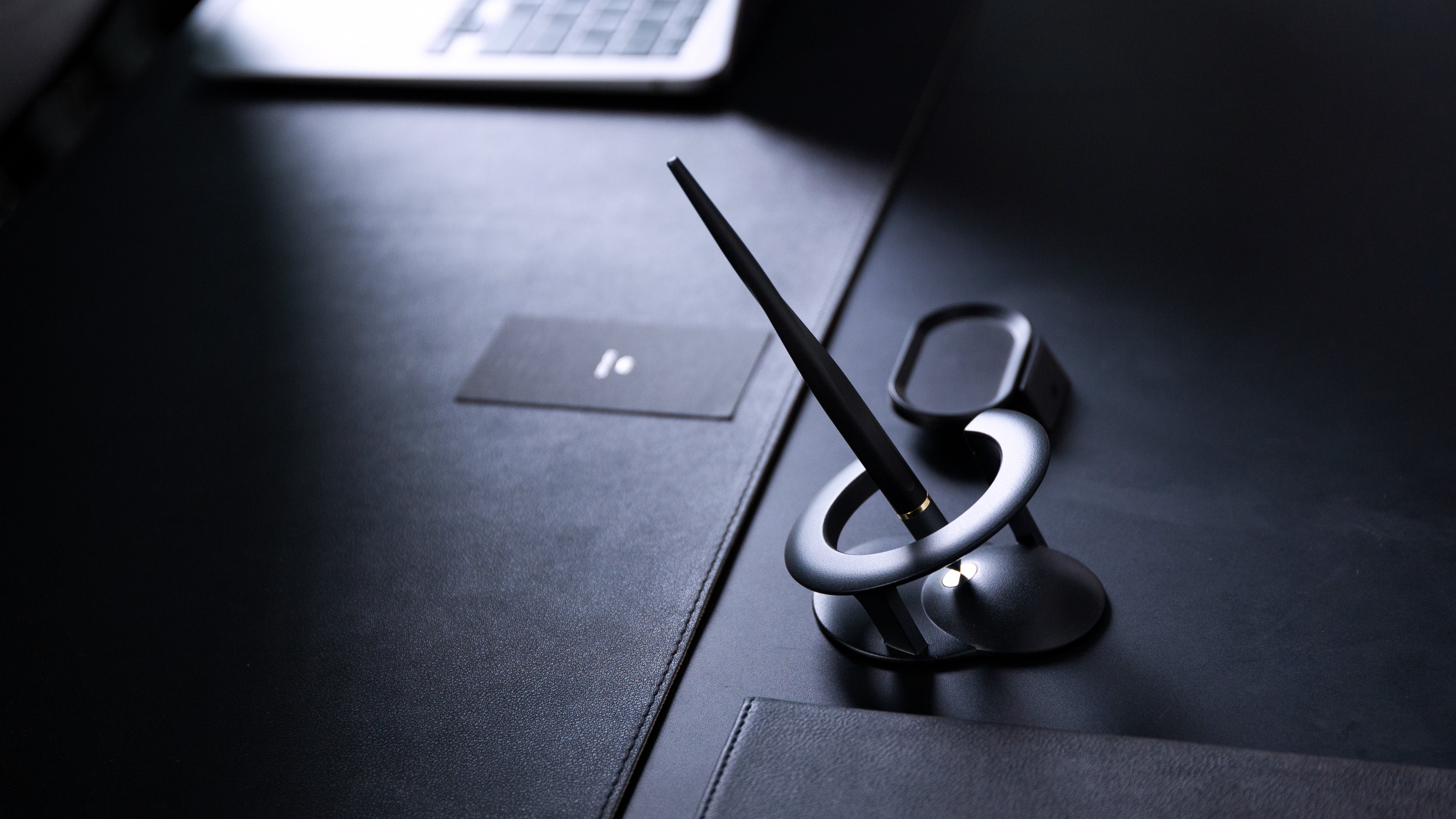
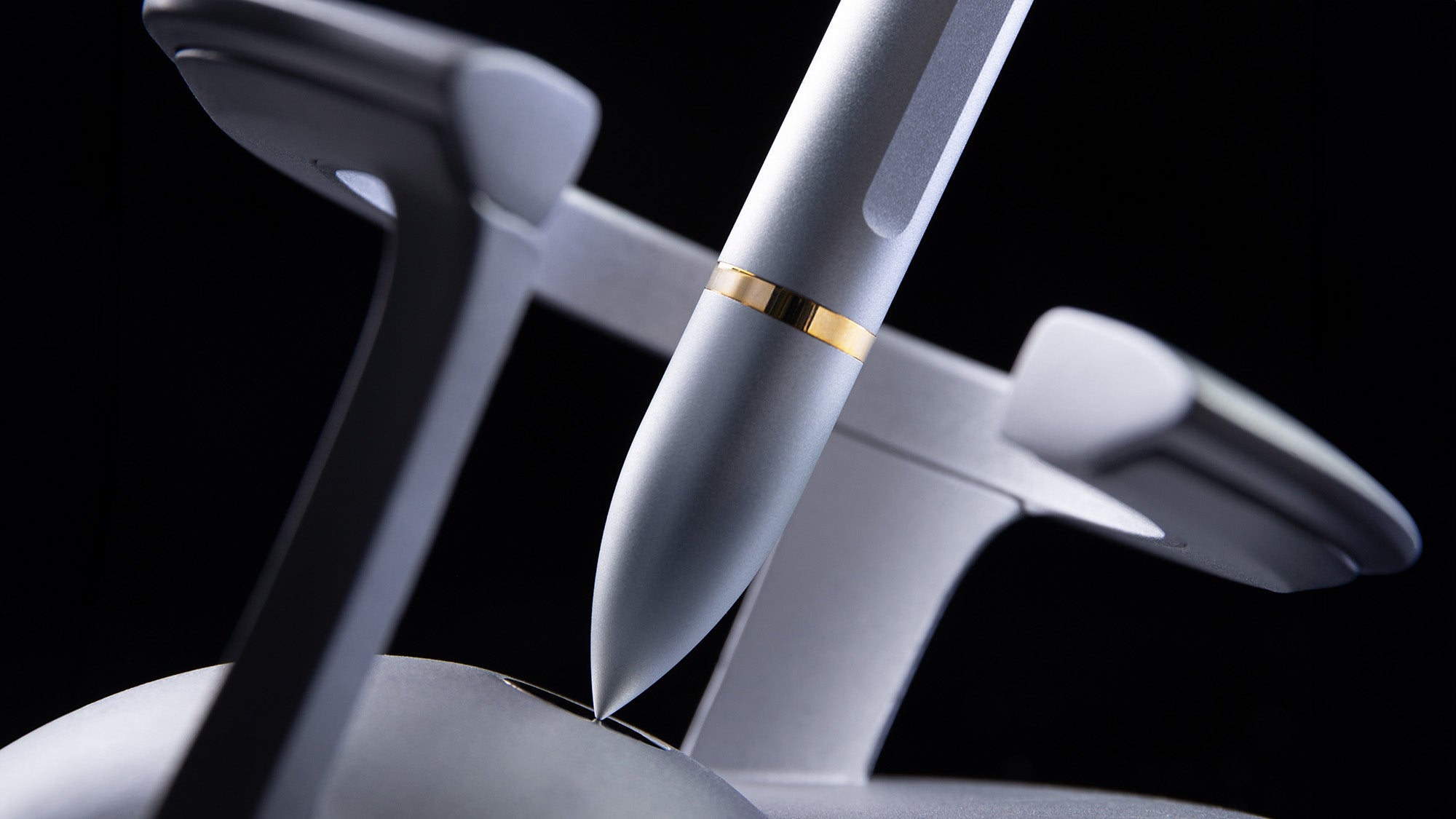
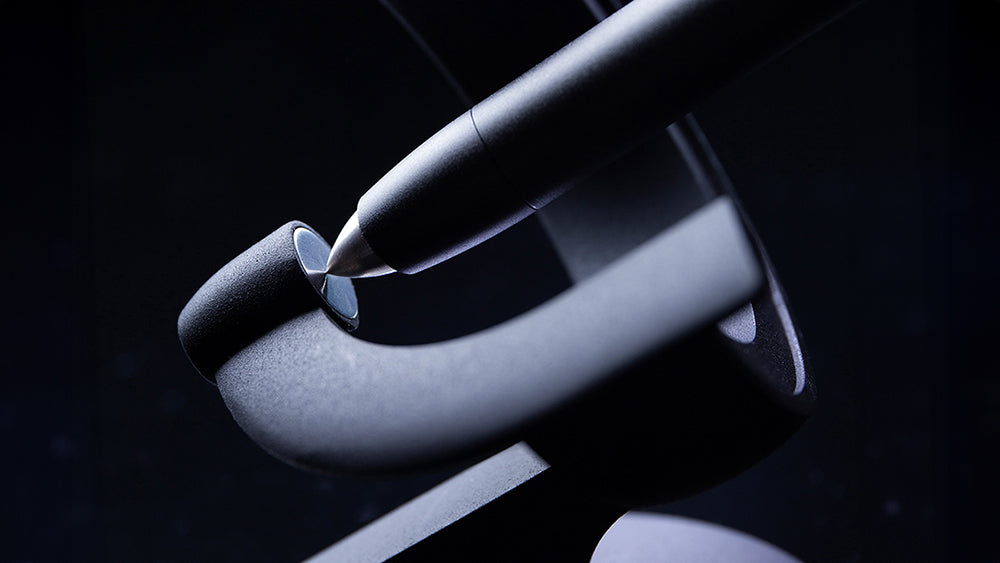
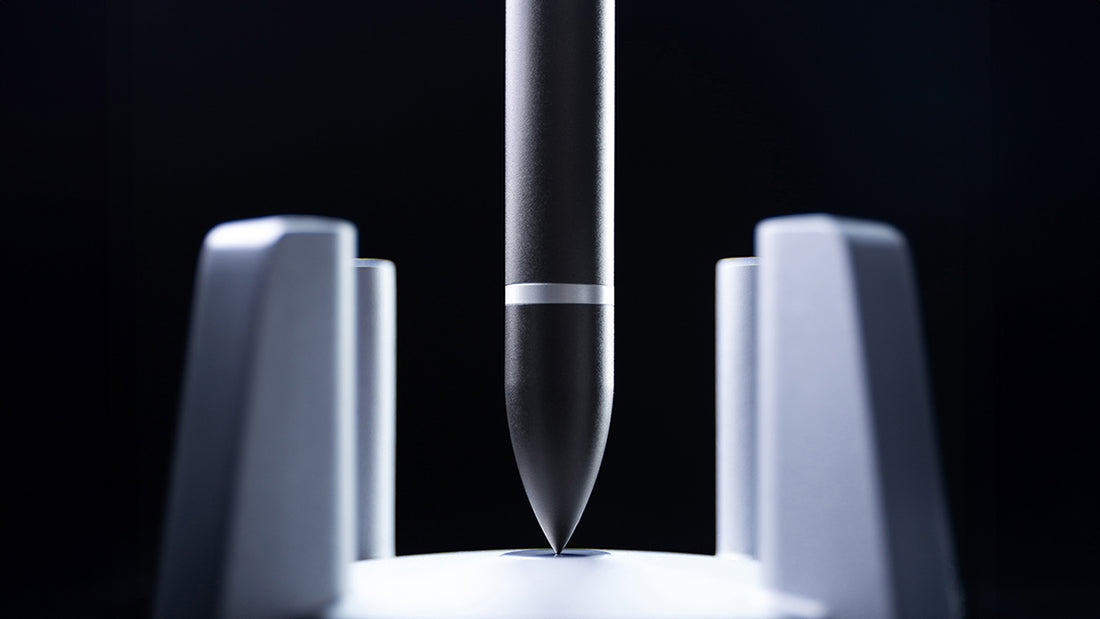
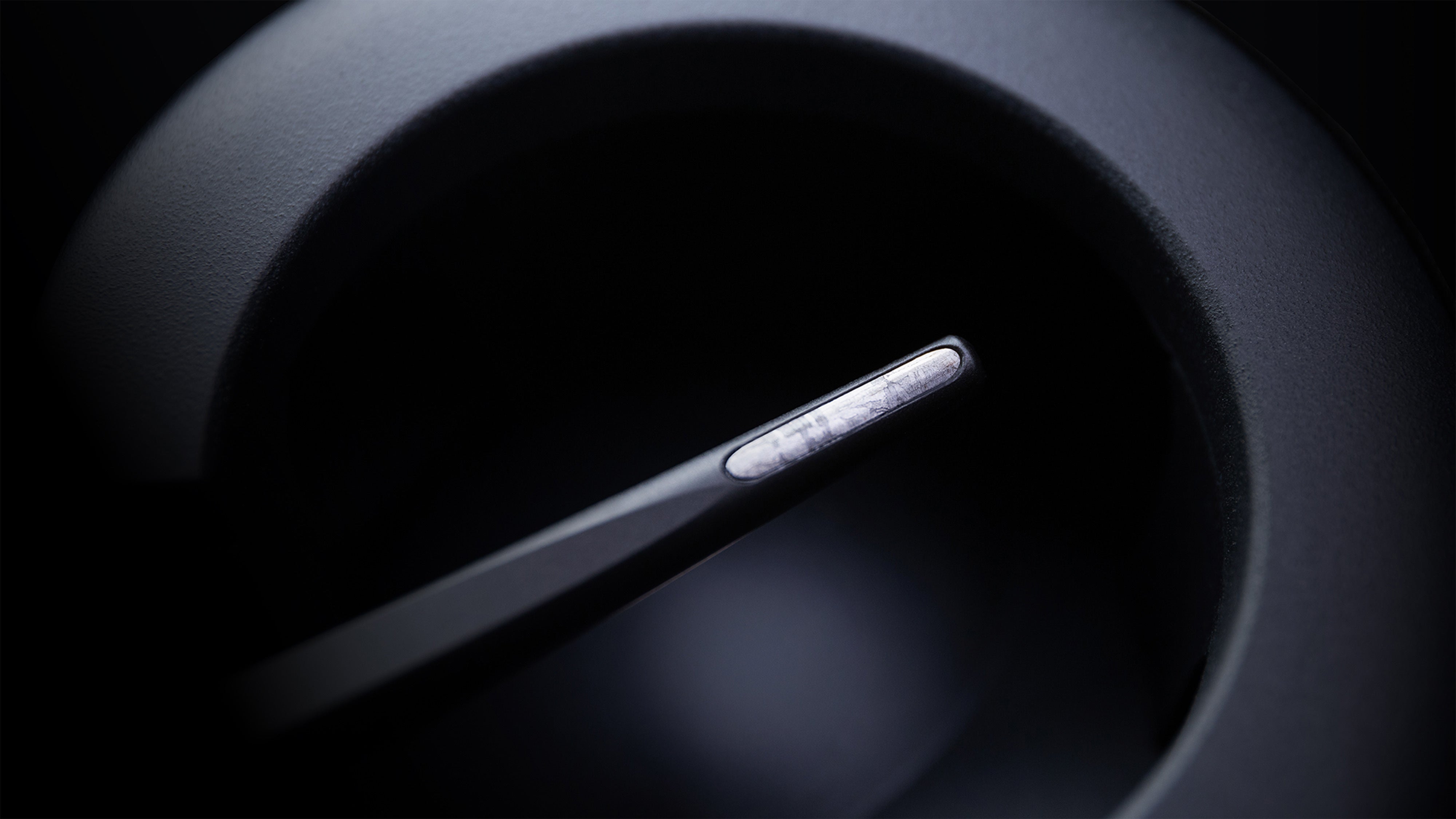
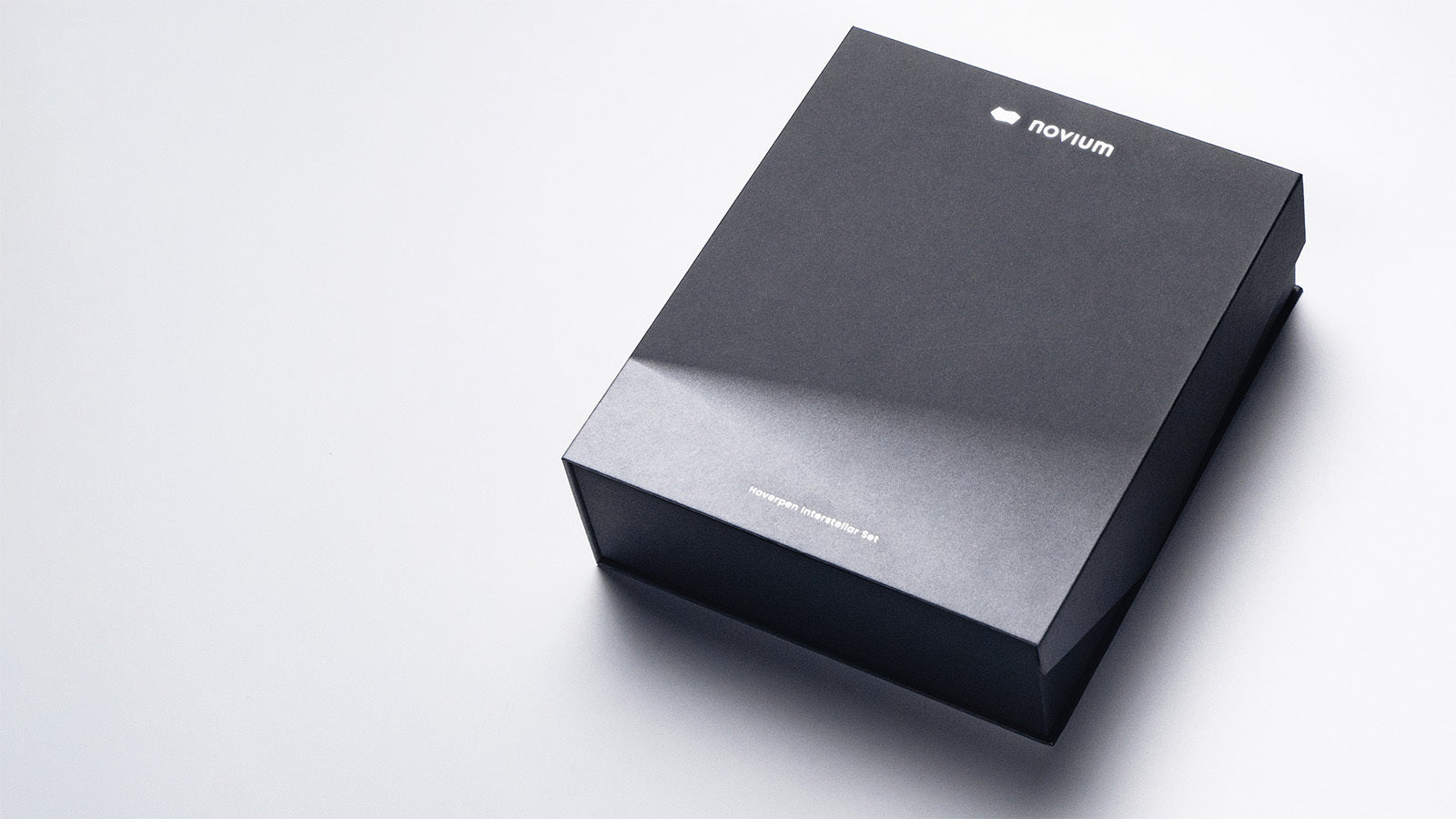
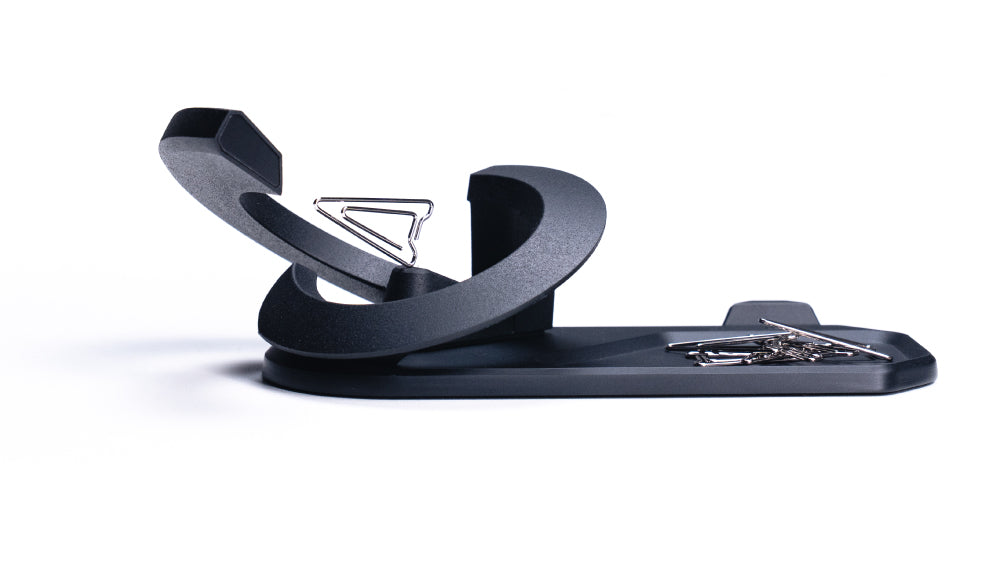
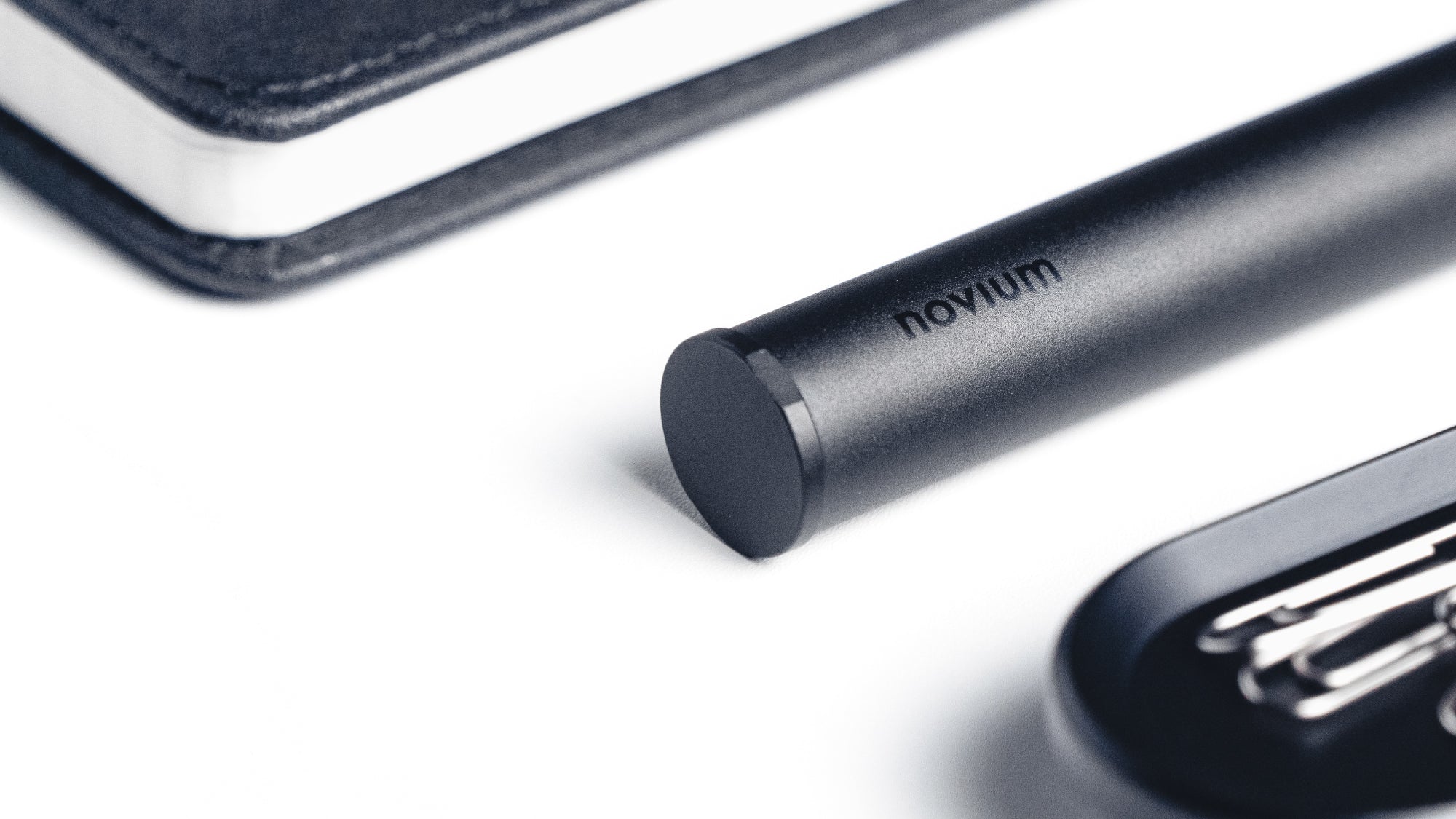
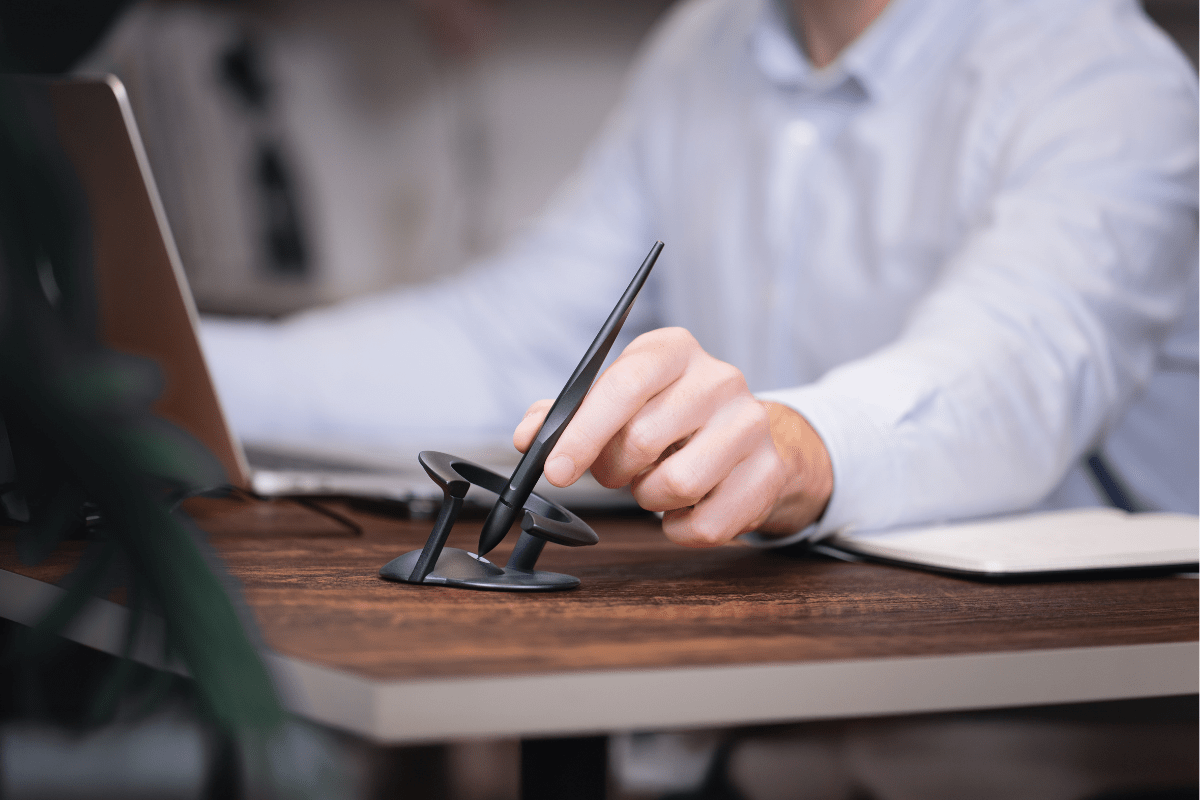
The Hoverpen is a pen by Novium that hovers upright above a precision-calibrated magnetic dock, held by magnetic repulsion alone — no battery, no electronics, nothing to charge. Each one is CNC-machined from a single block of aerospace-grade 6061 aluminum and hand-finished with a scratch-resistant anodized coating, through more than 100 fabrication processes for each pen.
The Hoverpen Interstellar hovers at 23.5 degrees, the axial tilt of the Earth. It was named TIME Best Inventions of 2022, and has won the Platinum A' Design Award and Gold at the MUSE Design Awards.
Why it works as a creative break
Lift it. Spin it. Set it back, and it returns to its hover.
That last part is the whole point. The break ends on its own. There is no feed, no next thing, no negotiation — the object completes its own cycle and you return to the problem you set down. It asks almost nothing of your attention, which is precisely the condition that outperformed rest in both meta-analyses. It produces no unfinished task, so there is no residue to carry back. And it sits on your desk rather than in a drawer, which means the break is available at the moment fixation sets in, not ten minutes later.
It is also, in the terms of the Knight and Haslam study, an object you chose. See how a Hoverpen differs from a regular pen, or browse Novium's levitating pens.
Frequently asked questions
How often should you take breaks at work to be more creative?
Often enough that you break before you stall rather than after. The HBR recommendation is to set a timer and switch at regular intervals rather than waiting for the feeling of being stuck, since that feeling arrives after fixation has already set in.
Are several micro-breaks better than one long break?
For creative work, regular alternation performed best in the Lu, Akinola and Mason experiments — participants who continually switched between two creative tasks outperformed those who took a single switch at the midpoint.
Do breaks hurt productivity?
No study in the 2022 PLOS ONE meta-analysis found that introducing a break reduced performance, even though breaks reduce time spent on the task. Well-being improved consistently.
What is cognitive fixation?
Cognitive fixation is the tendency to stay locked on one problem-solving approach and to fail to abandon it even when it is not working. It is the main mechanism by which breaks improve creative performance — stepping away loosens the fixation.
Do creative breaks help with analytical work too?
Less so. The meta-analysis found no measurable performance benefit from micro-breaks when the preceding task was cognitively demanding, and the researchers suggest those tasks may require breaks longer than ten minutes.


Leave a comment
This site is protected by hCaptcha and the hCaptcha Privacy Policy and Terms of Service apply.