
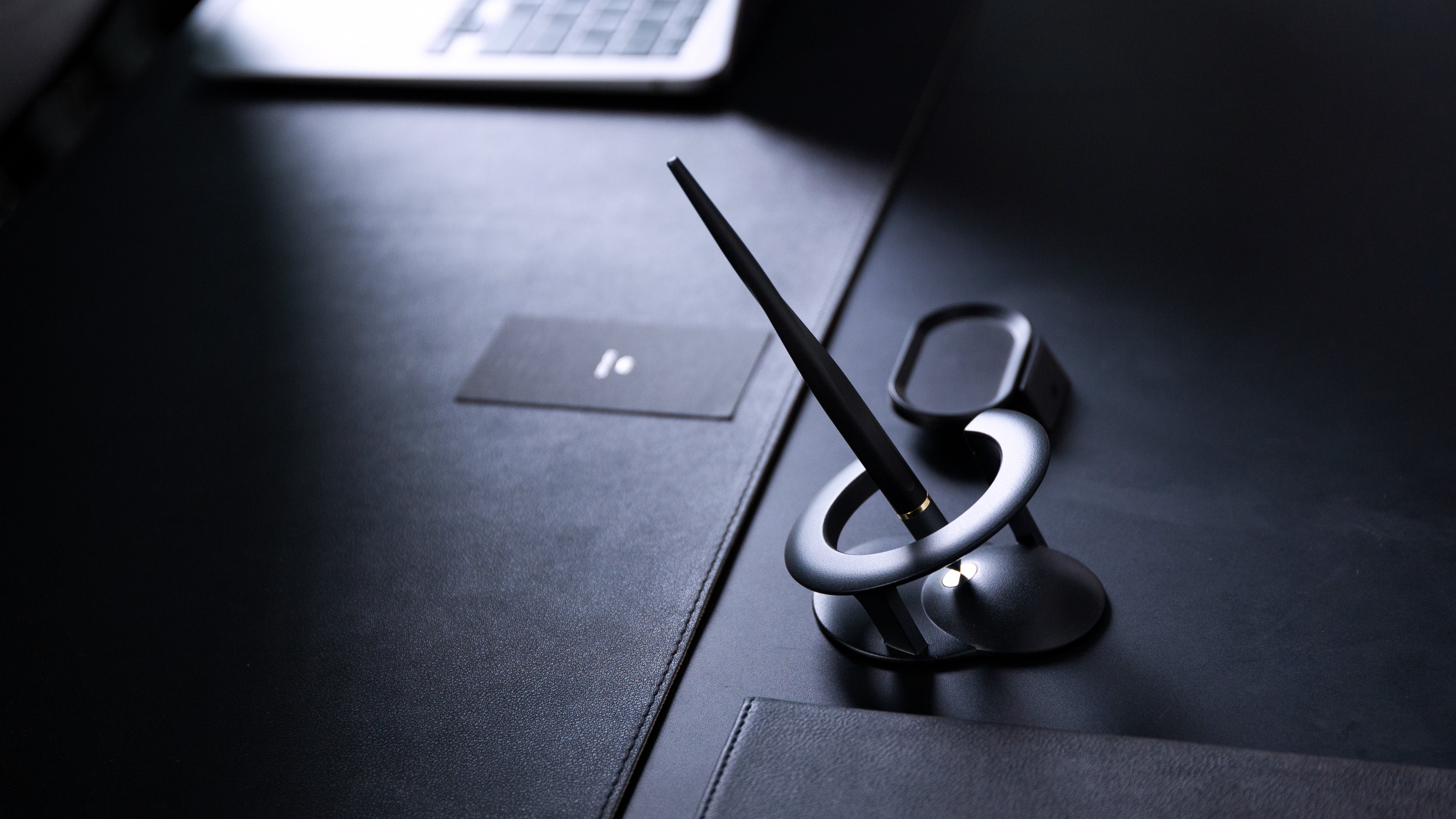
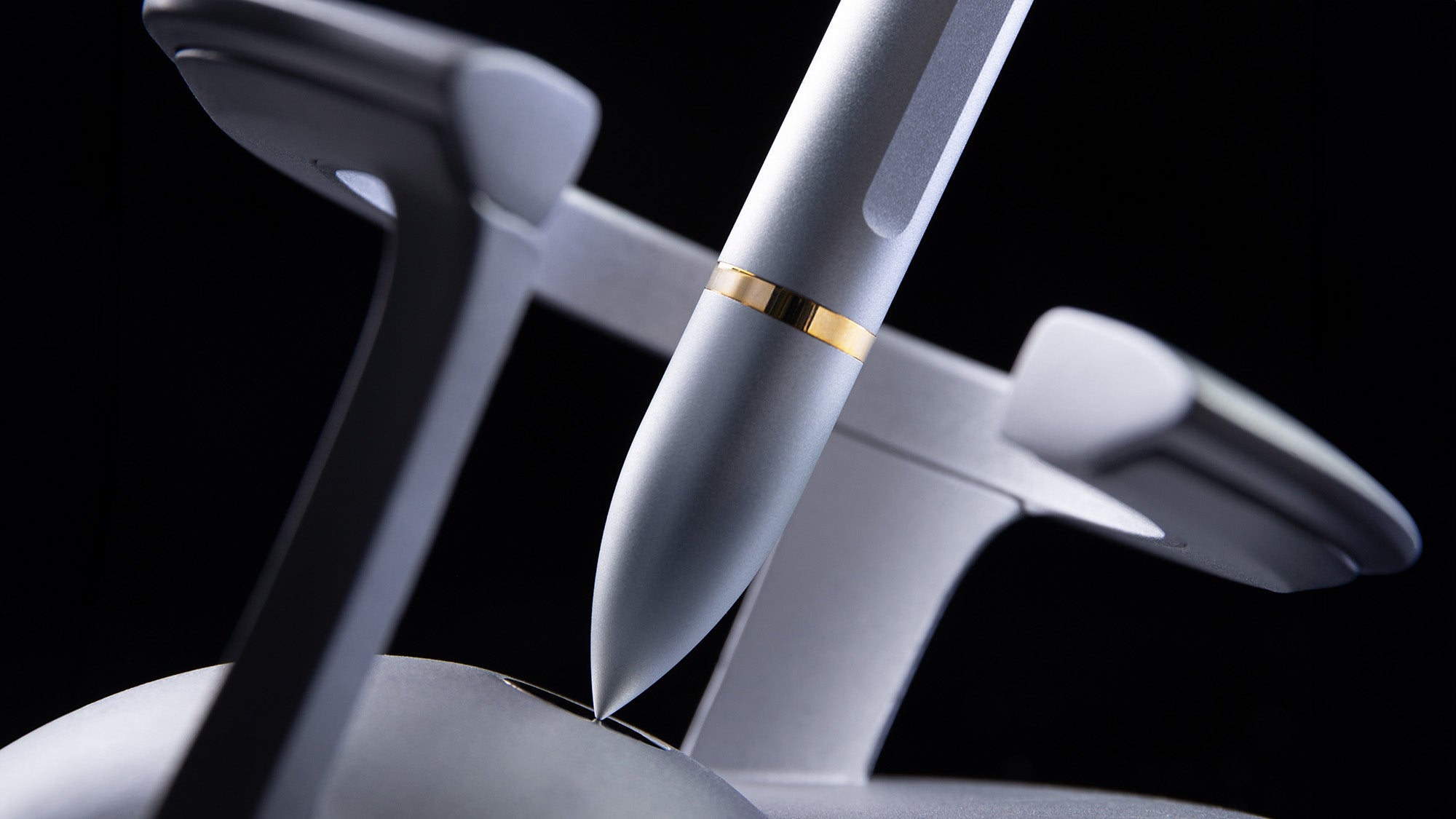
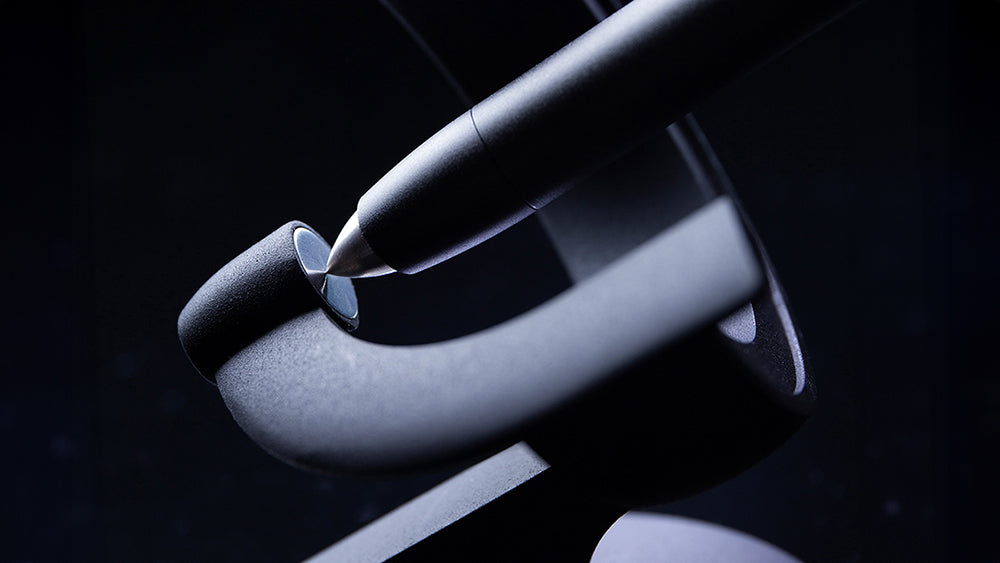
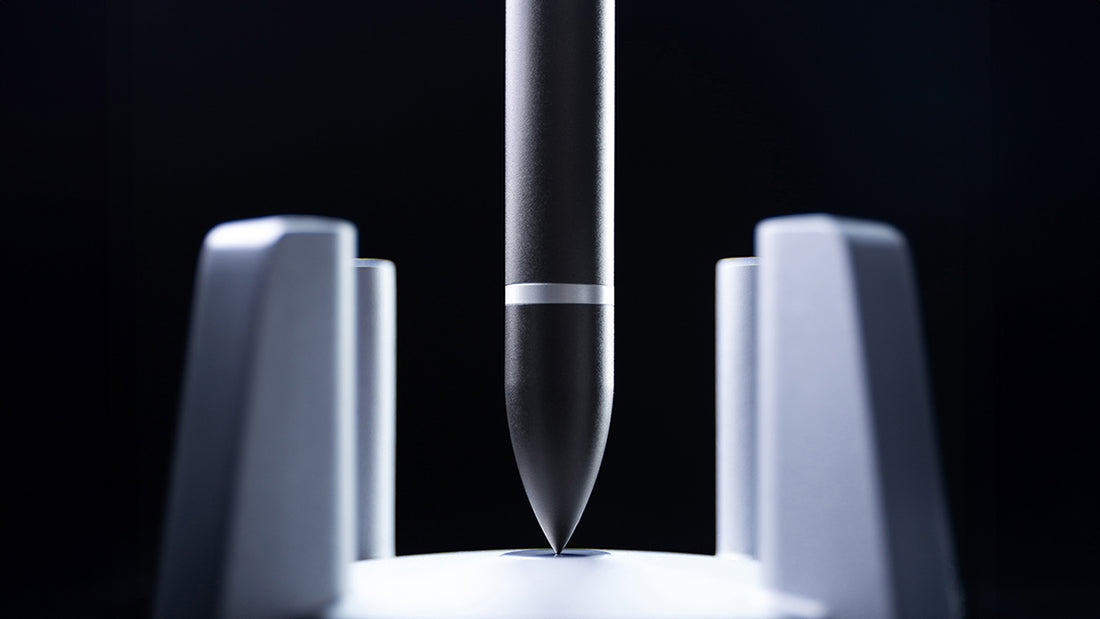
A $35 levitating pen and a $72 Hoverpen are not the same product at different prices. They are two completely different objects. Let us explain.
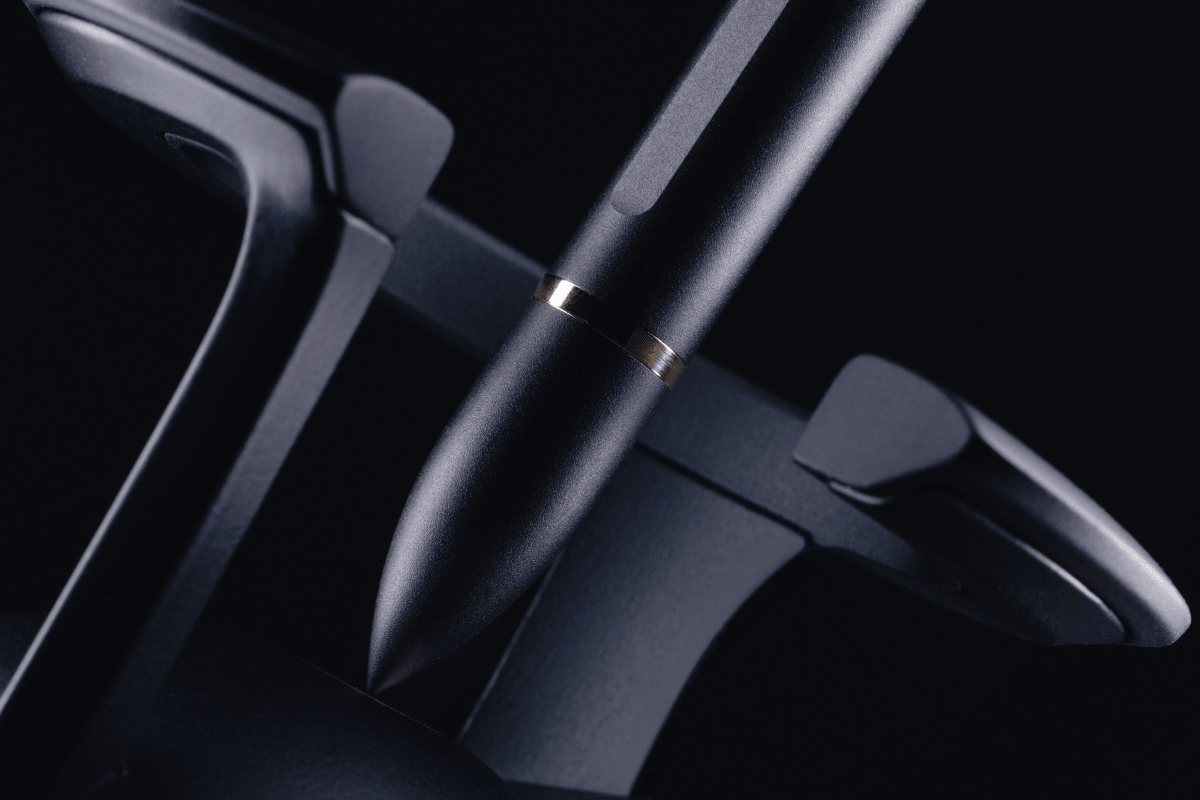
One copies the mechanism. The other invented it — patented, and integrated it into a pen CNC-machined from a single block of aerospace aluminum.
If you are searching for a levitating pen, a hoverpen, or a floating pen – a handful of brands show up between $30 and $55. Most are honest about what they sell. Their own names. Their own designs. However, none are the authentic, original Hoverpen.
Here is what separates a generic levitating pen from the original Hoverpen.
What is the difference between a cheap levitating pen and the original Hoverpen?
A cheap levitating pen is a clone: another brand's magnetic pen that imitates the Hoverpen's mechanism and design while selling under its own name. Legal, and openly its own product.
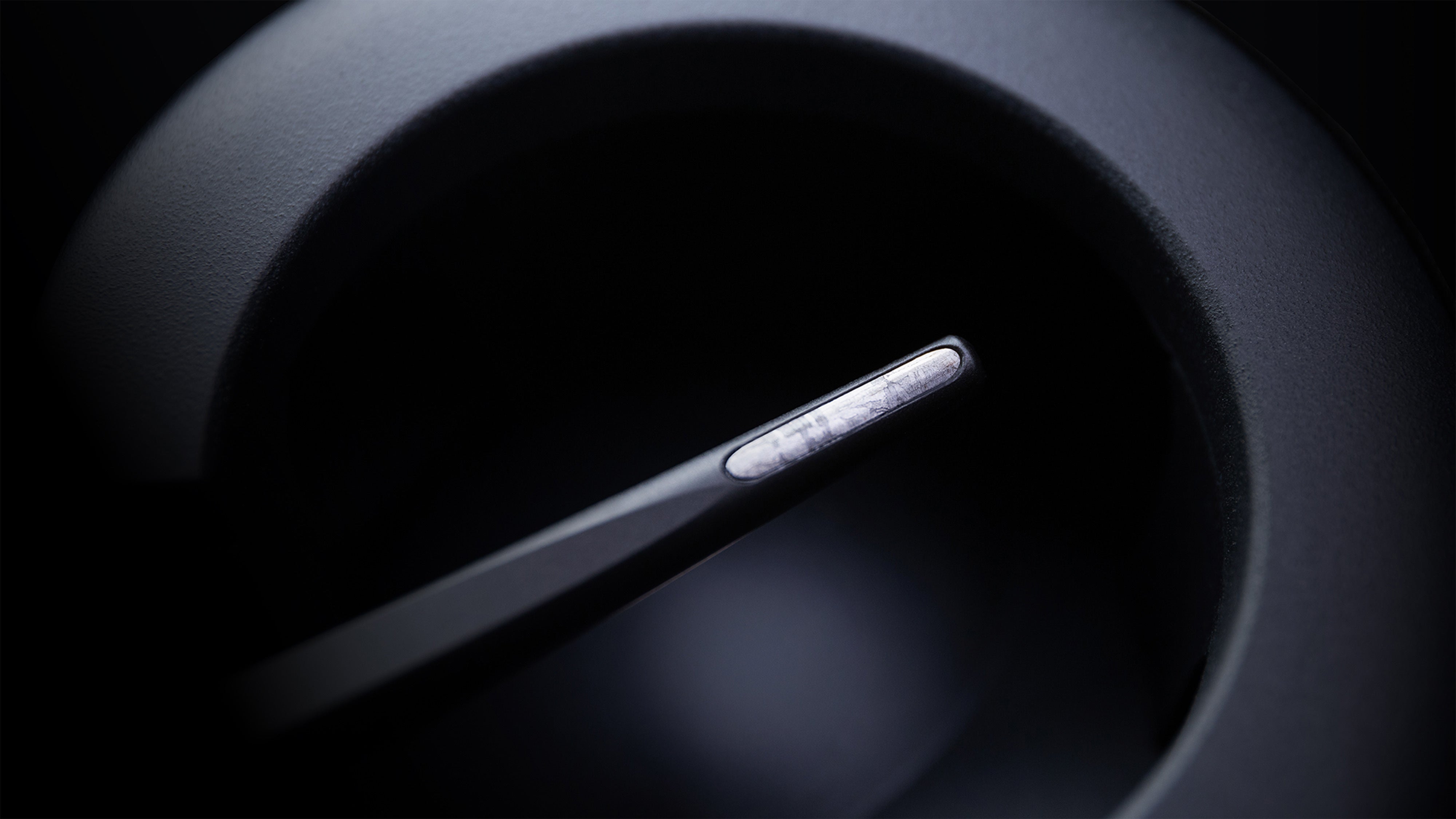
The difference is that the Novium Hoverpen is CNC-machined from aerospace-grade 6061 aluminum, floats at a precise angle, and rests on a mechanism covered by two granted US utility patents.
It has the awards to match. The Hoverpen Interstellar was named to TIME's Best Inventions of 2022, and took a Platinum A' Design Award and Gold at the MUSE Design Awards. Three independent juries, one pen.
| Cheap levitating pen | Novium Hoverpen | |
|---|---|---|
| Brand | Unbranded, or a marketplace-only name | Novium |
| Material | Often cast or coated; spec fields frequently read ABS plastic | CNC-machined from one block of 6061 aluminum |
| Mechanism | Copies the magnetic principle | Two granted US utility patents |
| Hover angle | Not stated | Fixed: 90°, 60° or 23.5° by edition |
| Refill | "Premium standard," usually unnamed | Standard D1 (Classic and Interstellar) |
| Typical price | $30–55 | $72 and up |

How does the Hoverpen work?
No power, no battery, no charging, no electronics of any kind. That is worth stating plainly, because most of what is written about these pens online is wrong. Listings and explainer pages routinely describe a base containing a sensor that tracks the pen's position and corrects for it, and instruct you to charge the base before use.
That describes a levitating globe or display, which does need power. It does not describe a Hoverpen or levitating pen. Pens in this category work passively. The pen finds the same position every time because the geometry gives it nowhere else to go.
Not all levitating pens are created the same, and that is where the price difference starts. The Hoverpen mechanism is the subject of two granted US utility patents, US 11,980,311 and US 12,044,349, both filed by Novium Taiwan Inc. A cheaper route to the same idea is easier to build and harder to hold to a fixed angle. Balance holds an angle. An approximation of balance holds a position, roughly, until something disturbs it.
Who made the original hovering pen?
Novium created it. Hoverpen® is Novium's trademark, and the pen it names was designed and engineered in Taipei by Novium Taiwan Inc.
The engineering sits on the public record. Novium holds two granted United States utility patents on the precision-calibrated magnetic mechanism — US 11,980,311, granted May 2024, and US 12,044,349, granted July 2024 — with US design patent D1,057,014 on the pen holder, granted January 2025. A further application is pending. All name inventors Kuo-Hung Liang and Ming-Wei Kuo.
The two kinds of patent do different work. A design patent covers how something looks. A utility patent covers how it works. Novium holds both.
What the utility patents describe is the specific engineering and design that holds a pen at one fixed angle, indefinitely, with no battery and no electronics.

Four checks that separate a clone from the original
| Check | Cheap levitating pen | Novium Hoverpen |
|---|---|---|
| 1. Hover angle | Floats, hovers, balances. No figure stated anywhere on the listing. | 90°, 60° or 23.5° by edition. A tolerance, held on the thousandth placement as on the first. |
| 2. Aesthetic | The silhouette copied. Proportions arbitrary, because ratios are not in a photograph. | Pedestal height, taper and mass placement resolved against each other. |
| 3. Build and finish | Cast or moulded, then coated. Spec fields frequently read ABS plastic. | CNC-machined from one block of 6061 aluminum, then hand-finished by artisans in Taiwan. |
| 4. Design reference | Starts from an existing product. No idea underneath it. | Starts from the cosmos. 23.5° is Earth's axial tilt, chosen first and engineered to. |
1. Does the listing state a hover angle in degrees?
A Hoverpen hovers at one of three angles. 90° on the Classic. 60° on the Future. 23.5° on the Interstellar — Earth's axial tilt.
Those are not descriptions of where the pen settles. They are tolerances, held by a precision-calibrated magnetic field, and they read the same on the thousandth placement as on the first.
Clone listings describe a pen that floats, hovers, or balances. Ask for the angle in degrees and nothing comes back, because nobody specified one. Hovering roughly upright is a different engineering problem from returning to 23.5° every time.
A listing that cannot state the angle is not describing a Hoverpen.
2. Is the pen body machined, or cast and coated?
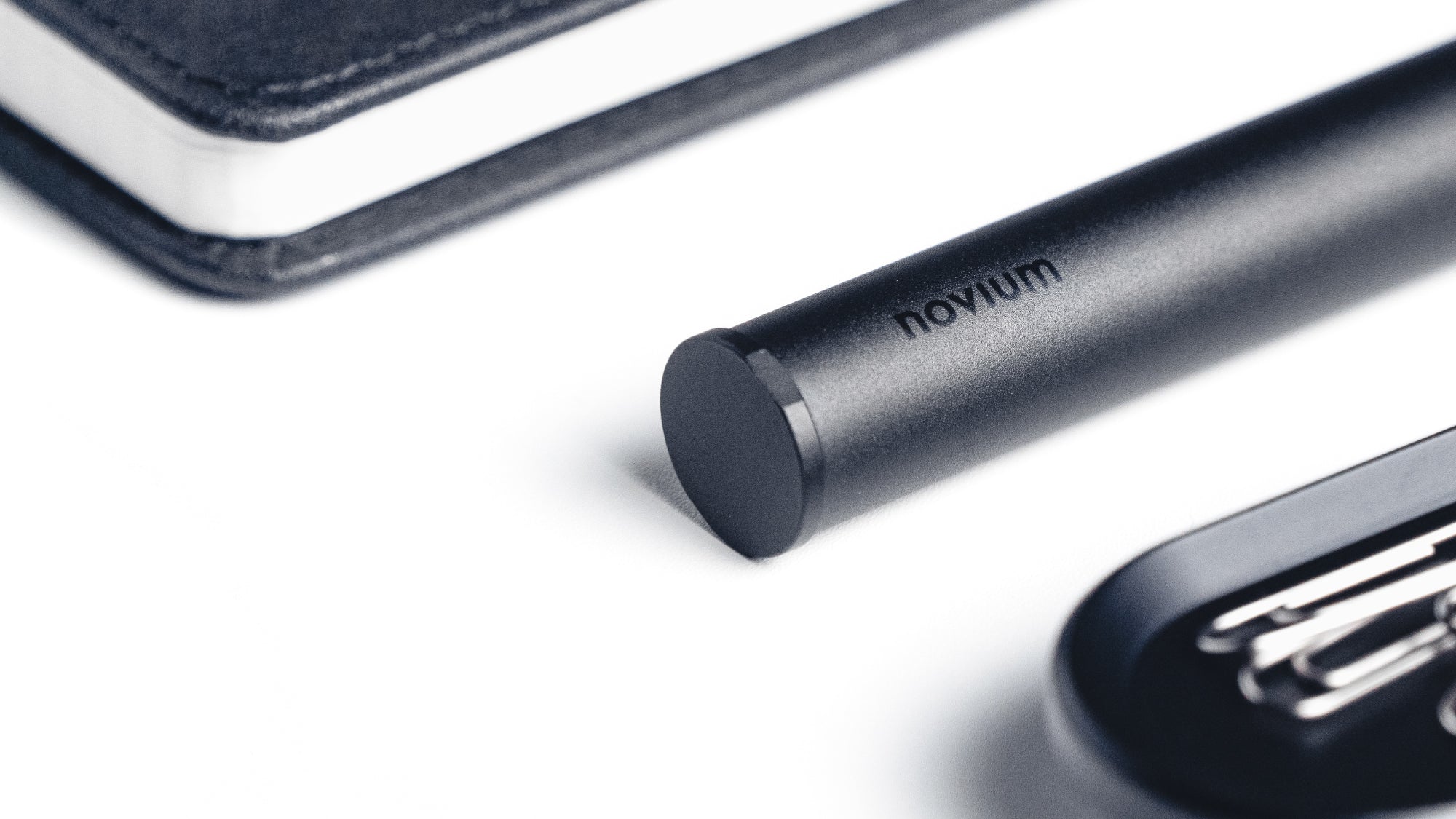
The body is CNC-machined from a single block of aerospace-grade 6061 aluminum, across more than 100 fabrication processes. Then it is hand-finished by artisans in Taiwan.
Machine accuracy sets the tolerances. Hand work sets the surface. Neither substitutes for the other, and a pen that skipped either would feel like a different object.
3. Does the Hoverpen design have a reference point?
Novium designs from the cosmos. Orbital mechanics, axial tilt, the geometry of bodies held in balance by forces you cannot see. Every line, surface and radius on a Hoverpen resolves back to that idea.
Which is why the Interstellar hovers at 23.5° and not at a round number. The angle is Earth's. Chosen first, then engineered to.
Clone products have no reference point, because a clone starts from an existing product rather than from an idea. It shows as arbitrary decisions — a radius matching nothing, a proportion with no argument behind it. No single one is wrong. Nothing connects them either.

What does the price difference buy?
Four things. None of them shows in a listing photograph.
Aerospace-grade 6061 aluminum
6061 is the alloy used in aircraft structures and bicycle frames, chosen for strength-to-weight and for how it takes a finish. The pedestal is machined zinc alloy, weighted at 215 g so the base stays put while the pen is lifted and replaced.
Clone bodies are commonly ABS plastic or a light cast alloy, whatever the bullet points say. Both photograph identically. Neither survives a desk the same way.
More than 100 fabrication processes, from one block
Each body is CNC-machined from a single block of aluminum, then hand-finished. Not cast in halves. Not moulded and glued.
That is the difference worth paying for, and it is structural rather than cosmetic. No seams. No joins. No glue line waiting to separate. Nowhere for the body to fail, because there is nowhere it was put together.
A cast-and-coated pen has a seam whether or not you can see it under the coating. Find the seam and you have found where it will eventually go.
Standard D1 cartridges
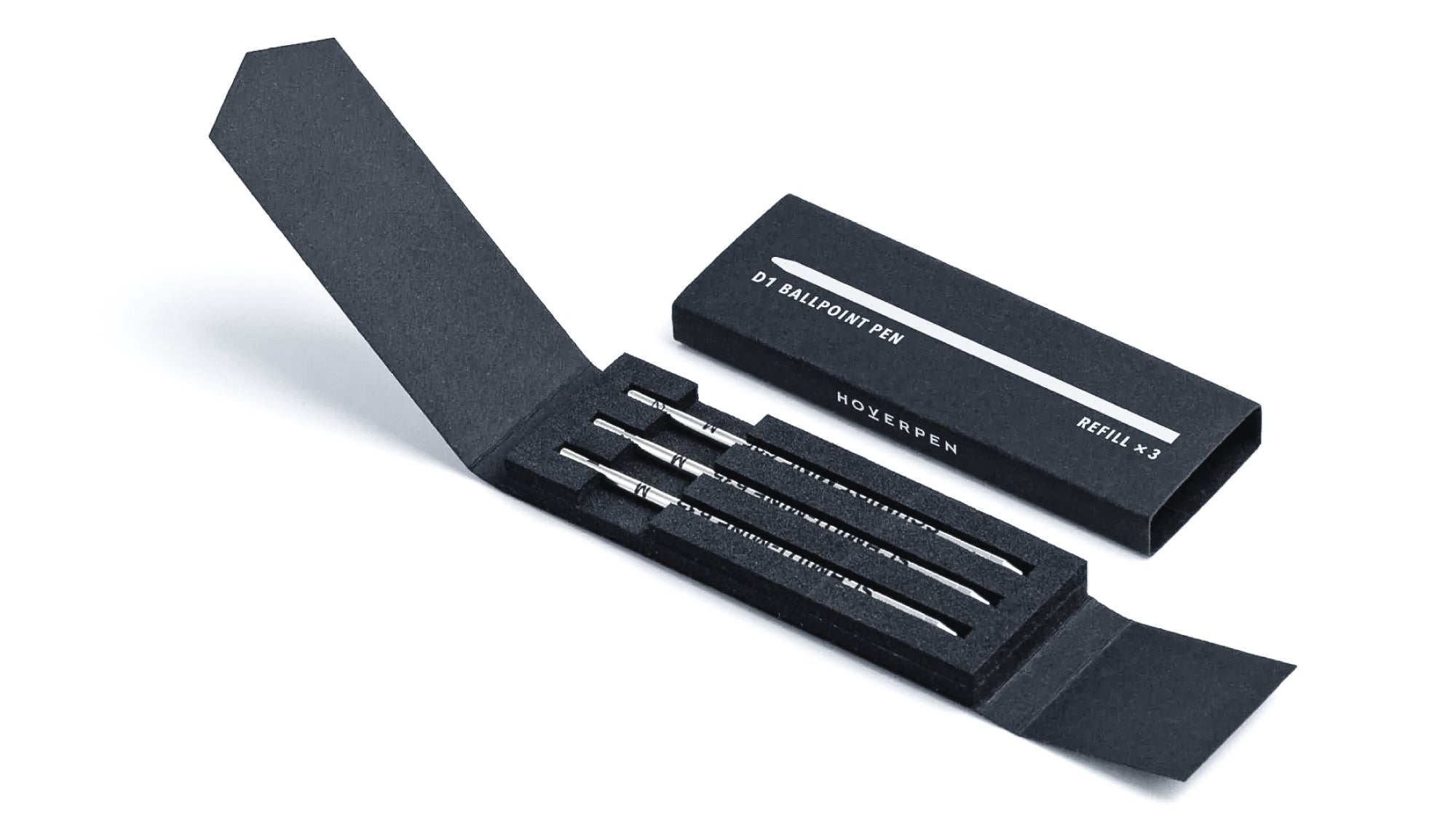
The Hoverpen Classic and Interstellar take standard D1 ballpoint cartridges — the international size, made by Schmidt and by other manufacturers, sold everywhere, stocked independently of Novium. A pincer tool comes in the box for changing them.
The point is not the ink. It is that the part is a standard. You are not locked to one supplier, and you are not holding a pen that becomes an ornament when a proprietary refill is discontinued. Clone listings tend to promise a premium standard refill with no size or part number attached, which is not a standard at all.
Novium stocks refills for every edition, and our guide to ballpoint, rollerball and fountain pens covers which suits which hand.
548 days of invention
The Interstellar took 548 days from first sketch to first shipment. Most of that was not spent designing a pen. It was spent on the magnetic arrangement underneath it, which is the part that became two granted US utility patents.
A clone starts on day one with the answer in front of it, photographed from six angles. That is the whole difference in development cost, and it is most of the difference in price.

Which Hoverpen hovers at which angle?
The mechanism is shared. The angle is not.
Hoverpen Classic — 90°
Vertical. The pen stands straight from its pedestal — the most recognizable of the silhouettes, and the one most people picture when they picture a hovering pen. Ballpoint, D1 cartridge. Explore the Hoverpen Classic.
Hoverpen Interstellar — 23.5°
Hovers at the exact angle of Earth's axial tilt. Named one of TIME's Best Inventions of 2022, awarded a Platinum A' Design Award and Gold at the MUSE Design Awards. Explore the Hoverpen Interstellar.
Hoverpen Future — 60°
A shallower stance that reads as motion rather than monument. A 2-in-1 modular fountain pen that also doubles as a rollerball pen, designed with an interchangeable pen body allowing for seamless switch in writing style. Explore the Hoverpen Future.
Hoverpen Interstellar Meteorite Edition — 23.5°
The oldest object you will hold. The Meteorite edition is inlaid with a fragment of the Muonionalusta Meteorite — 4.56 billion years old. No two are alike. Explore the Meteorite Edition Hoverpen.

Where to buy the Hoverpen?
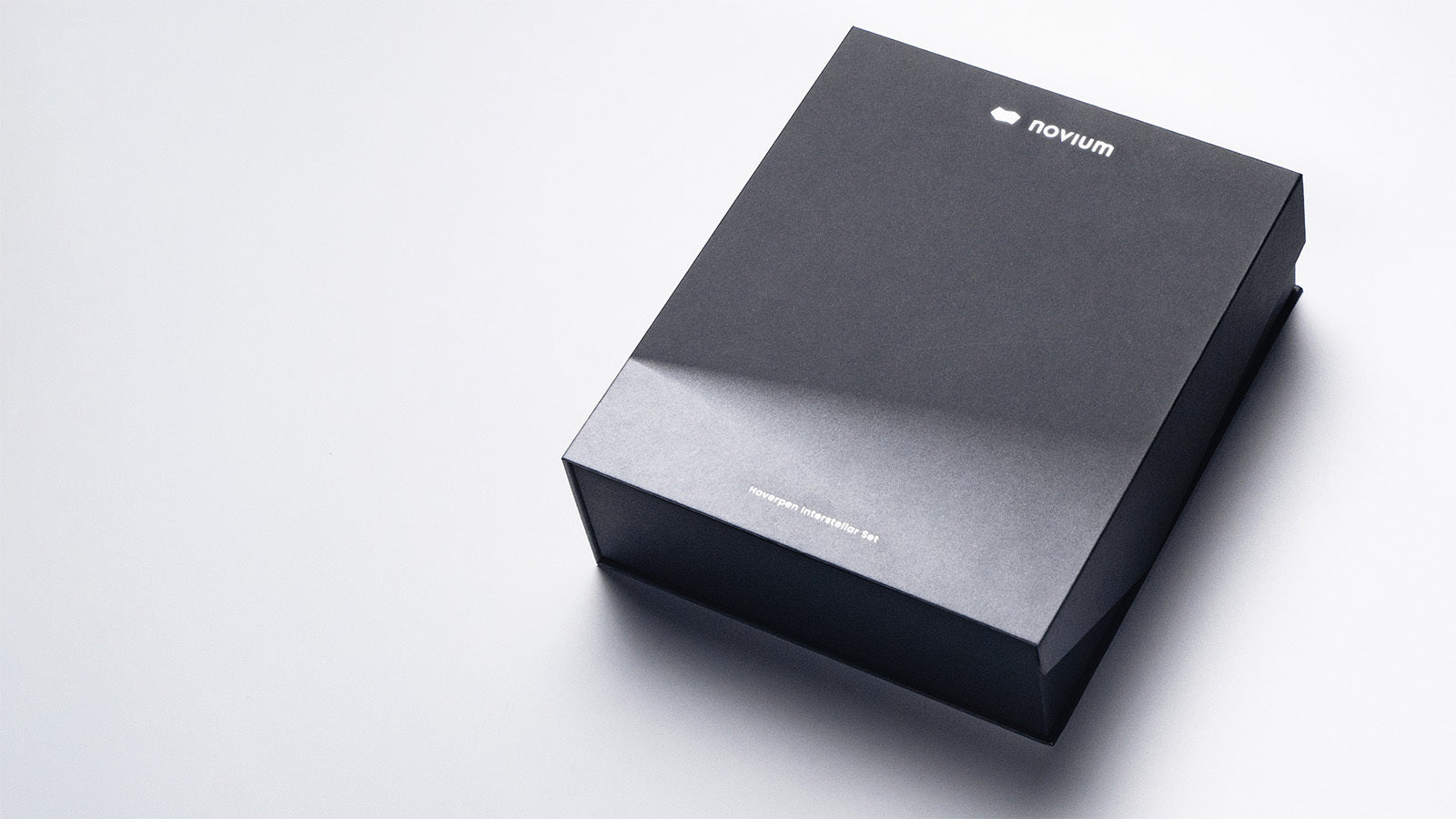
Buy the Hoverpen direct from Novium. Every edition is in stock on noviumdesign.com, ships free within the US, and arrives in a magnetic gift box.
Buying direct is the only way to be certain which edition you are ordering, which angle it holds, and which cartridge is in it. Marketplace listings for a levitating pen rarely state any of the three.
Three things worth knowing before you order:
The Hoverpen Collection – The entry model is the Hoverpen Classic and the collection extends to the special edition Hoverpens such as the Hoverpen Interstellar – Meteorite Edition.
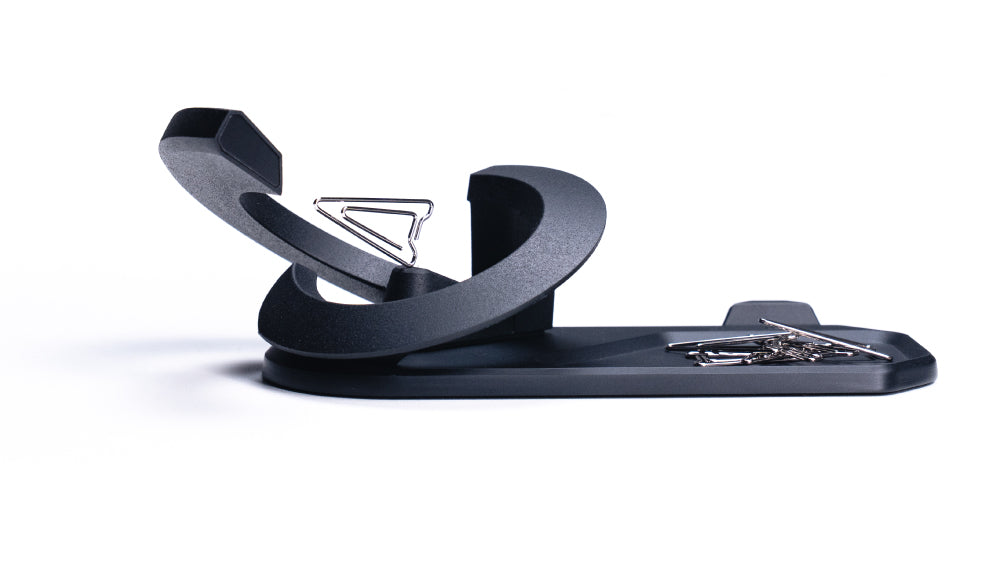
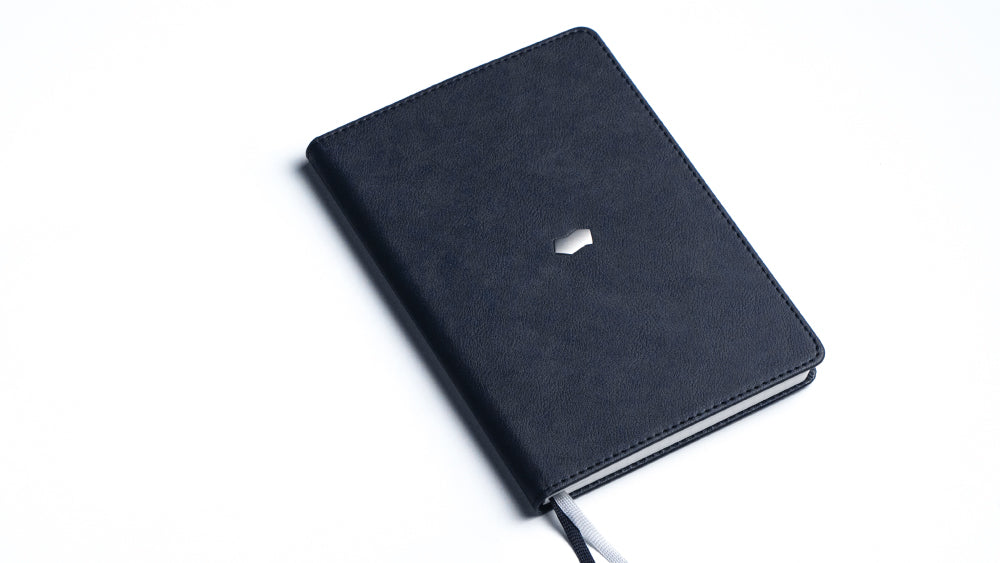
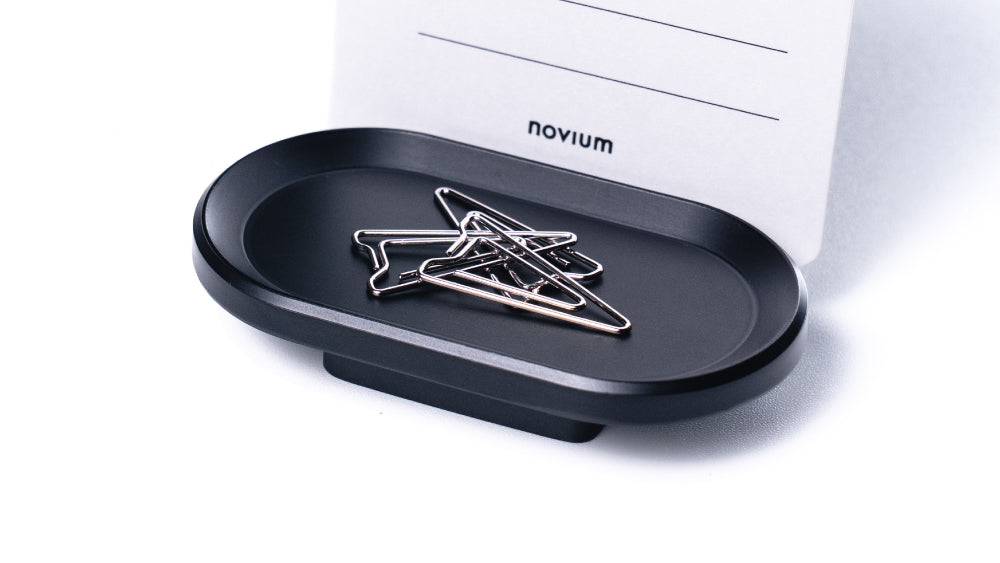
The Hoverpen Gift Set – If you are buying a Hoverpen as a gift, the Interstellar gift set ships with the dock, notebook, spare refills and productivity cards already in the box.
Our guide to where to buy the Hoverpen covers the authorized channels.

Frequently asked questions
Are cheap levitating pens the same as a Hoverpen?
No. Most are clones — separate brands selling their own magnetic levitating pens between $30 and $55. They copy the mechanism, not the pen. They are legal products under their own names, usually built from different materials, and they carry no Novium warranty.
Is the Hoverpen patented?
Yes. Novium Taiwan Inc. holds two granted US utility patents on the magnetic support mechanism, US 11,980,311 and US 12,044,349, and US design patent D1,057,014 on the pen holder. Utility patents cover how the mechanism works; the design patent covers how it looks. All three are public and searchable by number.
What is the best levitating pen?
For a writing instrument you refill for decades, compare three specifications: body material, whether the hover angle is stated in degrees, and whether the refill is a named standard size. The Novium Hoverpen is CNC-machined from aerospace-grade 6061 aluminum, hovers at a fixed 90°, 60° or 23.5° depending on edition, and the Classic and Interstellar take standard D1 cartridges.
Why is the Hoverpen more expensive than other levitating pens?
The body is CNC-machined from a single block of aerospace-grade 6061 aluminum, across more than 100 fabrication processes, then hand-finished by artisans in Taiwan — rather than cast and coated. One block means no seams and no joins to fail. The Classic and Interstellar take standard D1 cartridges. The magnetic mechanism is covered by two granted US utility patents, developed across 548 days.
How can I tell a clone listing from the original online?
Read the specification table rather than the bullet points, because listings often describe metal in the marketing copy while the material field reads ABS plastic. Ask for the hover angle in degrees. Check whether the refill is a named standard size. A product built to a specification can answer all three; a product built to a price point answers in adjectives.
Does the Hoverpen need batteries?
No. the Hoverpen does not need batteries, or charging. It does not run on electricity.
How much does a Hoverpen cost?
The Hoverpen Classic starts at $72, the Interstellar at $99, the Future at $159, and the Interstellar Meteorite Edition at $399. Novium also offers upgrade options such as the 18K gold-plated Interstellar and an 18K solid gold nib Future.
Where can I buy the original Hoverpen?
Buy direct from Novium at noviumdesign.com, where every edition is in stock and US orders ship free. Buying direct is the only way to confirm the edition, the hover angle and the cartridge before you order. Novium also supplies a small number of authorised in-store stockists and runs a corporate gifting programme with engraving from 40 units.


Leave a comment
This site is protected by hCaptcha and the hCaptcha Privacy Policy and Terms of Service apply.